Lock Replacement Service in Minneapolis: A Homeowner’s Guide
It's a cold Minneapolis morning, you're trying to get out the door, and the front lock suddenly fights back. The key goes in, but it grinds. You jiggle it, pull it out, try again, and now you're wondering whether you're late for work, whether the lock is about to fail completely, and whether your home is as secure as you thought.
That's usually the moment people start searching for a lock replacement service. Sometimes the lock really is worn out. Sometimes the problem is smaller and cheaper to fix. Either way, you want a straight answer, a careful job, and no damage to the door you already paid plenty for.
For Twin Cities homeowners, this isn't a small issue. The U.S. locksmith industry was projected at $3.0 billion in 2026, and replacement and repair activity made up 28.5% of revenue, which shows how often households need this kind of work. Individual households also account for 44.8% of the market, according to IBISWorld's locksmith industry overview. If you're dealing with a stubborn deadbolt in Minneapolis or St. Paul, you're not the only one.
This guide is built for local homeowners who want to know when to replace a lock, when rekeying makes more sense, what happens during the visit, and what a fair Twin Cities estimate should look like. If you're looking for service in the metro, Mena's Key in Minneapolis is one local option for mobile locksmith help.
Table of Contents
- Your Guide to a Secure Home in the Twin Cities
- Seven Telltale Signs You Need to Replace Your Locks
- Lock Replacement vs Rekeying A Practical Comparison
- The Lock Replacement Process What to Expect On-Site
- Estimating Cost and Time for Lock Replacement in the Twin Cities
- Why Choose Menas Key for Your Lock Replacement
- Frequently Asked Questions About Lock Replacement
Your Guide to a Secure Home in the Twin Cities
Minneapolis homeowners usually don't call about a lock at the first little hiccup. They call when the problem starts affecting daily life. The front deadbolt sticks every night. The side entry handle has a loose feel. The back door only locks if you lift the handle first and push hard against the frame.
Those symptoms matter because a lock can fail in two ways. It can stop letting you in, or it can stop protecting the door the way it should. Both are worth taking seriously, especially in a place where homes see big swings in temperature, older housing stock, and plenty of daily use on main entry doors.
Real problems usually start small
A lock rarely announces total failure in one dramatic moment. More often, you get warnings. The key drags. The latch sounds rough. The cylinder starts to feel sloppy. If you've just moved into a house in South Minneapolis, Northeast, Richfield, or St. Paul, there's another issue too. You may have no idea how many copies of the old key are still out there.
A lock doesn't have to be completely dead to be the wrong lock to keep on your door.
That's why a good service call starts with diagnosis, not assumptions. Some doors need a full hardware swap. Others need rekeying. Others just need alignment work and a proper inspection of the latch, strike, and door fit.
Security should feel routine
The best outcome is simple. You close the door, turn the key or thumbturn, and it works cleanly every time. No shoulder-checking the frame. No second try. No wondering if the bolt seated.
In the Twin Cities, a practical lock replacement service should focus on that result. Clean operation, correct fit, and hardware that matches how the door is used.
Seven Telltale Signs You Need to Replace Your Locks
Some lock problems are obvious. Others fool people into waiting too long. If you notice any of the signs below, it's time to take a closer look.
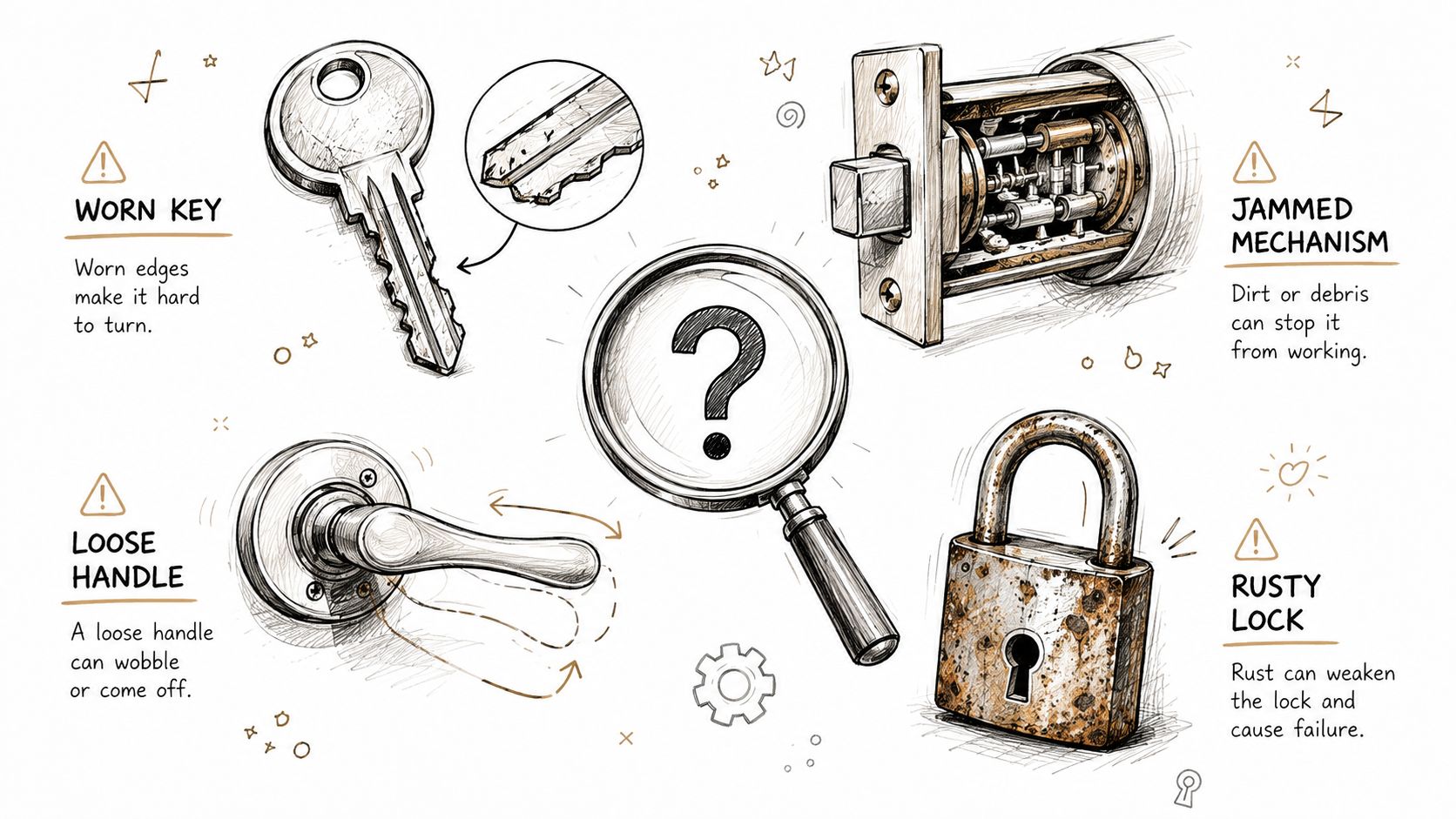
What wear looks like in real life
The key sticks, grinds, or needs extra force
If the key doesn't turn smoothly, don't keep muscling it. That can mean internal wear, poor alignment, dirt in the cylinder, or a failing latch assembly.The lock feels loose in the door
A wobbly cylinder, shifting trim, or handle movement often points to worn hardware or mounting issues. The lock may still work today, but it's not a good sign.You can see rust, corrosion, or finish failure
Exterior hardware takes abuse. Moisture, salt, and age all show up in Minneapolis entries. Rust around the faceplate, screws, or latch area often means the lock has gone past simple maintenance.The latch doesn't catch cleanly
If you need to pull, lift, or push the door just right to lock it, the problem may be the latch, the strike, or both. That kind of strain wears the hardware faster.
Here's a deeper look at common household lock trouble before you decide on full replacement: Minnesota home lock issues and fixes.
A quick visual walkthrough can also help you spot issues before they turn into an emergency:
When replacement is the safer call
You moved into a new home
The lock may function perfectly, but key control is unknown. Previous owners, old roommates, contractors, dog walkers, and relatives may still have copies.Your keys were lost or stolen
If the missing key can be tied to your address or routine, replacing the lock or at least changing key access moves from convenience to security.There was a break-in attempt or you want an upgrade
A lock that has been forced, pried, or twisted should be inspected closely. Even if it still turns, internal damage can linger. Some homeowners also choose replacement when moving from basic hardware to keypad or smart lock systems.
Practical rule: If the hardware is compromised, visibly worn, or no longer matches your security needs, replacement is usually the cleaner long-term fix.
Lock Replacement vs Rekeying A Practical Comparison
This is one of the most common questions on a service call, and it's a good one. Rekeying changes which key operates the lock. Replacement changes the physical hardware. The right choice depends on whether the problem is about key control, hardware condition, or both.
When rekeying makes sense
Rekeying is often the smart move when the lock itself is still in solid shape. You moved in, the deadbolt works smoothly, and you just don't want old keys floating around. Landlords, homeowners after a purchase, and anyone after a roommate change often fit this category.
It also saves perfectly good hardware from being tossed out for no reason.
There's another important detail many homeowners miss. A hard-turning key doesn't automatically mean you need new hardware. Industry data shows that 60% to 70% of these “malfunction” cases can be resolved with simple lubrication and screw tightening, according to this locksmith repair discussion. That's a useful reminder to ask whether the issue is wear, misalignment, or something smaller before approving a full swap.
Decision Guide Replace or Rekey
| Criteria | Lock Rekeying | Lock Replacement |
|---|---|---|
| Best for | Existing lock works well, but you want old keys disabled | Lock is damaged, outdated, forced, or you want different hardware |
| Hardware change | No. Existing lock stays in place | Yes. Old hardware is removed and replaced |
| Key control | New key pattern for the same lock | New hardware, and usually new keys |
| Appearance | Door looks the same | Lets you change finish, style, or type |
| Security upgrade | Limited to the quality of the current lock | Lets you move to stronger or smarter hardware |
| Good fit for new homeowners | Yes, if current locks are sound | Yes, if the existing locks are poor quality or worn |
| Typical decision point | “The lock is fine, but I don't trust who has keys” | “The lock itself is the problem” |
Homeowners in the Twin Cities often ask for replacement when rekeying would do the job, and sometimes ask for rekeying when the hardware is clearly at the end of its life. The best conversations happen when the locksmith tests the door and explains what's failing.
If your current hardware is still sound and the issue is key control, residential rekeying service for homes and businesses may be the more practical route.
The trade-off people don't expect
Quotes can change once the lock comes apart. A door that looks like it just needs a new deadbolt may also have a sagging latch, loose strike screws, or a poorly aligned frame cutout. That's not automatically upselling. It's often what becomes visible after the trim and latch come off.
Ask two direct questions:
- Can this be repaired instead of replaced
- If you open it up and find alignment issues, what changes in the quote
That keeps the conversation honest and saves surprises.
The Lock Replacement Process What to Expect On-Site
Most homeowners feel better once they know what the visit looks like. A proper lock replacement service is careful, not rushed.
The first few minutes matter
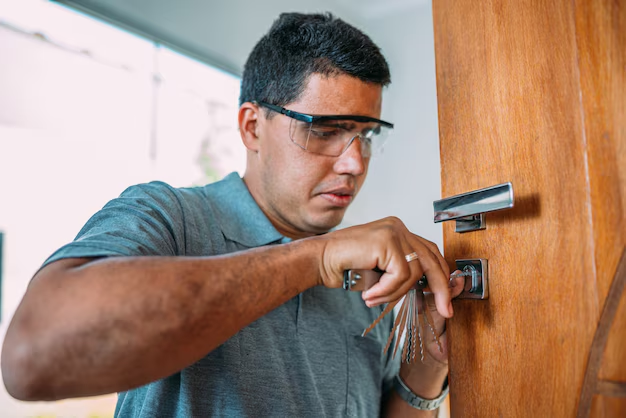
The technician should start by checking the existing hardware, how the door closes, how the latch meets the strike, and whether the issue is the lock. That first inspection is where a lot of bad decisions get avoided.
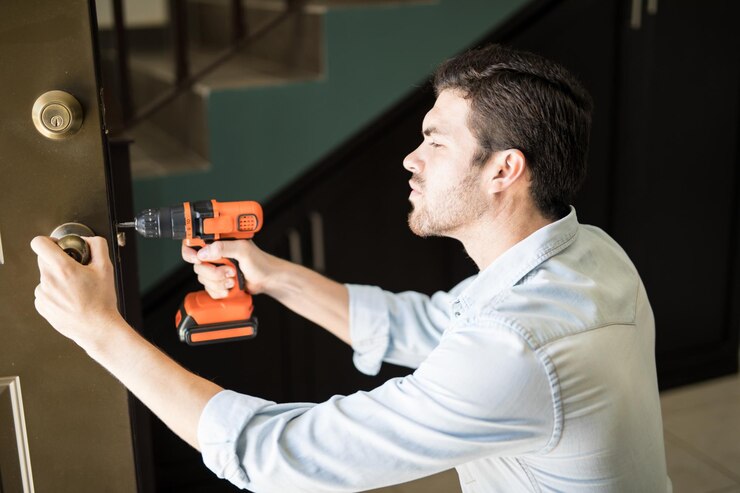
Next comes removal of the old hardware. The trim comes off, the cylinder or thumbturn is separated, and the latch is pulled from the door edge. A clean technician avoids gouging the finish and pays attention to screw condition and existing hole wear.
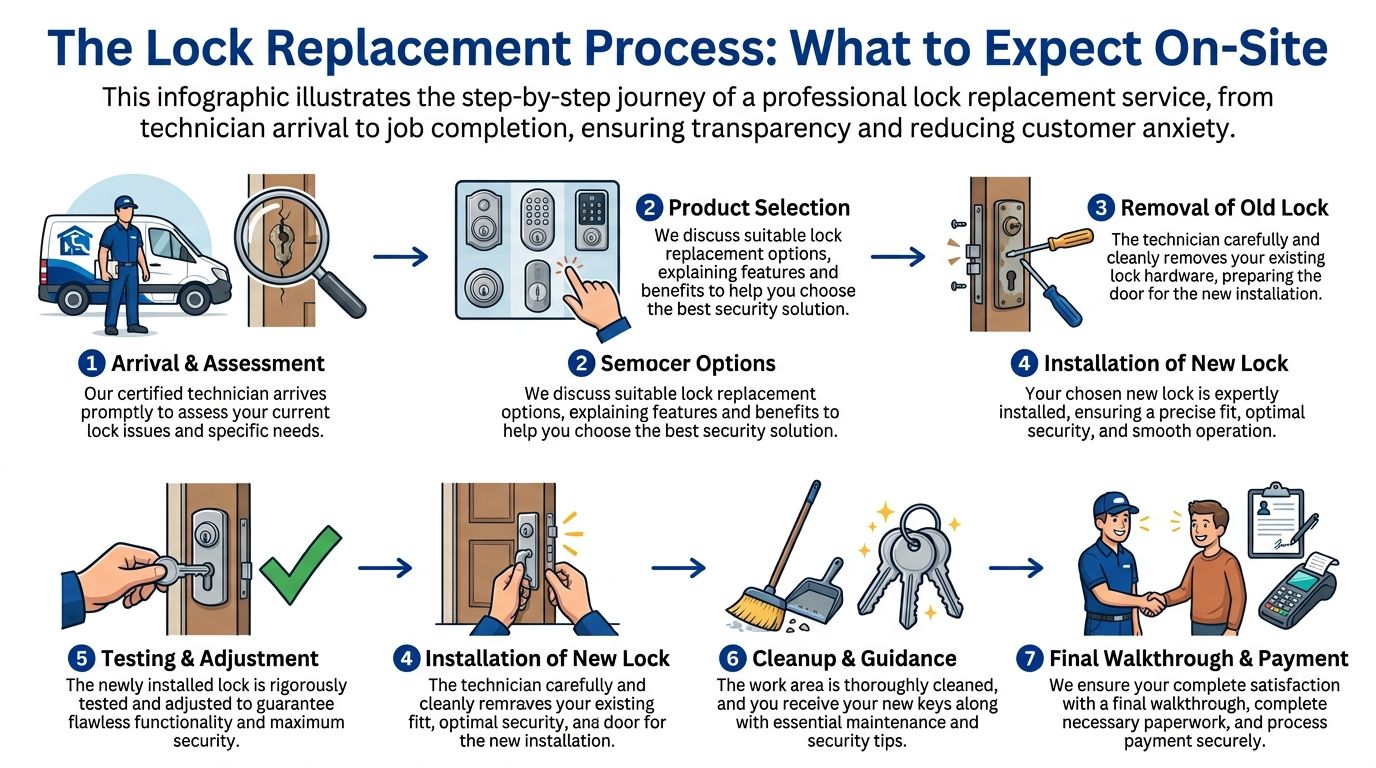
A good installer also checks the backset, which is the distance that determines whether the latch sits correctly in the door. For modern residential doors, the standard backset is typically 2-3/8 inches, and using an incompatible size can lead to a 40% to 60% higher rate of latch failure, according to this lock measurement glossary. That's one of those details homeowners shouldn't have to think about, but professionals absolutely should.
Installation, testing, and handoff
Once the new latch and trim are fitted, the lock gets tested several ways:
- Door open test to check key turn, thumbturn motion, and full bolt travel
- Door closed test to make sure the bolt enters the strike without rubbing
- Handle and latch check to confirm the spring returns cleanly
- Final alignment pass if the strike needs minor adjustment
The lock isn't finished when the screws are tight. It's finished when the bolt throws cleanly with the door closed.
A careful locksmith should also clean up shavings or old hardware debris, hand over the new keys, and explain any maintenance points. If the door frame is part of the issue, you should hear that clearly before the technician leaves.
Estimating Cost and Time for Lock Replacement in the Twin Cities
Twin Cities homeowners usually want two answers first. What's this going to cost, and how long will I be dealing with it?
For a standard residential deadbolt replacement, national benchmarks put the average at $203 to $240, and a professional installation for a standard residential deadbolt should take about 30 to 45 minutes, based on these lock installation benchmarks. That's a useful baseline, not a guaranteed local quote.
What drives the final quote
In Minneapolis and St. Paul, the final price usually depends on the door, the hardware, and the timing of the call.
- Standard deadbolt swap tends to be the most straightforward job if the existing prep is clean and the new hardware matches the door.
- Smart lock installation takes more setup. Verified market data puts smart lock installation with app setup and user provisioning at $280 to $500, while a standard residential rekey runs $120 to $200. The same data also notes that 62% of homeowners in Ohio-based surveys requested smart lock retrofitting during consultations, which helps explain why more homeowners now ask about keypad and app-based options. Residential service prices have also risen 4% to 6% since 2024, according to this locksmith market report.
- Older doors or alignment issues can add labor because the problem isn't just the lock. The strike may need adjustment, recesses may need cleaning, or the latch fit may need correction.
What a Minneapolis homeowner should ask
Instead of asking only for a flat price, ask for the parts of the estimate:
What hardware are you installing
Brand, grade, finish, keypad, smart features, and whether the latch is adjustable all affect the job.Is this replacement or could it be rekeyed
That can save money if the lock body is still in good shape.How long should this specific job take
A standard entry lock is one thing. A smart lock with setup, calibration, and user programming is another.Is there any likely door or frame adjustment
Older Minneapolis homes often differ from newer builds in this regard.
If you're calling after hours, during a lockout, or for same-day urgent service, expect the quote structure to reflect the urgency. That's normal. What matters is getting a clear estimate before work starts and making sure the installer explains what's included.
Why Choose Menas Key for Your Lock Replacement
You get one shot at a lock replacement before small mistakes turn into a sticking door, loose hardware, or a deadbolt that never throws cleanly. In Minneapolis and St. Paul, that matters even more because the housing stock is mixed. A 1920s bungalow, a South Minneapolis duplex, and a newer Bloomington entry door do not give you the same fit, backset, or alignment issues.
That local experience is the main reason homeowners call Mena's Key. The job is done on-site, with hardware matched to the door in front of us, not guessed from a generic template. If the existing prep can accept a standard replacement, we say so. If the door needs adjustment before new hardware goes in, we say that too.

What careful workmanship looks like
Homeowners are right to worry about damage. A rushed install can chip paint, strip screw holes, or leave the latch fighting the frame every time the door closes. Good lock work protects the door as much as it secures it.
Here is what that looks like on a real service call:
- Hardware fit is checked first so the replacement matches the existing bore, edge prep, and door thickness
- Latch direction is set correctly so the door closes without binding
- Screws are tightened with control to avoid tearing up older wood or crushing trim
- Strike placement is tested so the deadbolt and latch enter cleanly instead of scraping
- Finish protection stays in mind during removal and installation, especially on painted or older doors
A properly installed lock should feel smooth from the first turn of the key.
Clear communication matters just as much. If the right fix is a straightforward deadbolt replacement, that should be obvious in the estimate. If the lock is fine but the frame is out of alignment, a homeowner should hear that before paying for hardware that will not solve the problem.
That practical approach is what separates a real local locksmith from a call center referral. Twin Cities homeowners usually want the same thing. A secure door, a fair quote, and work that holds up through daily use and Minnesota weather.
Frequently Asked Questions About Lock Replacement
Can you replace a lock without the original key
Yes. A locksmith can usually replace the hardware even if you don't have the original key. The process may differ depending on whether the door is open, whether the lock is functional, and what type of cylinder is installed. If the lock is jammed shut, the technician may need to spend more time gaining access without damaging the door.
Should all exterior locks use the same key
Often, yes. Many homeowners prefer one key for the front, back, and side entry doors because it simplifies daily use. It's especially practical for families, dog walkers, and anyone managing multiple entries. The only caution is making sure the hardware is compatible for keying alike.
Will replacing a lock damage my door
It shouldn't when the work is done properly. Minor signs of previous wear may become visible when old hardware comes off, especially on older painted doors, but the replacement itself should be careful and controlled. Clean removal, correct latch fitting, and proper strike alignment matter more than speed.
What should I have ready before the locksmith arrives
Have access to the door, know which locks you want addressed, and think about whether you want standard keyed hardware, a keypad, or a smart lock. If you've recently moved in or lost a key, mention that right away. That helps the locksmith determine whether replacement, rekeying, or a smaller repair is the right call.
If your front door lock is sticking, worn out, or no longer giving you confidence, contact Mena's Key for a clear estimate and mobile locksmith help in the Minneapolis-Saint Paul area. A good lock replacement service should leave you with smooth operation, secure hardware, and no guesswork about what was done.
Built with Outrank tool