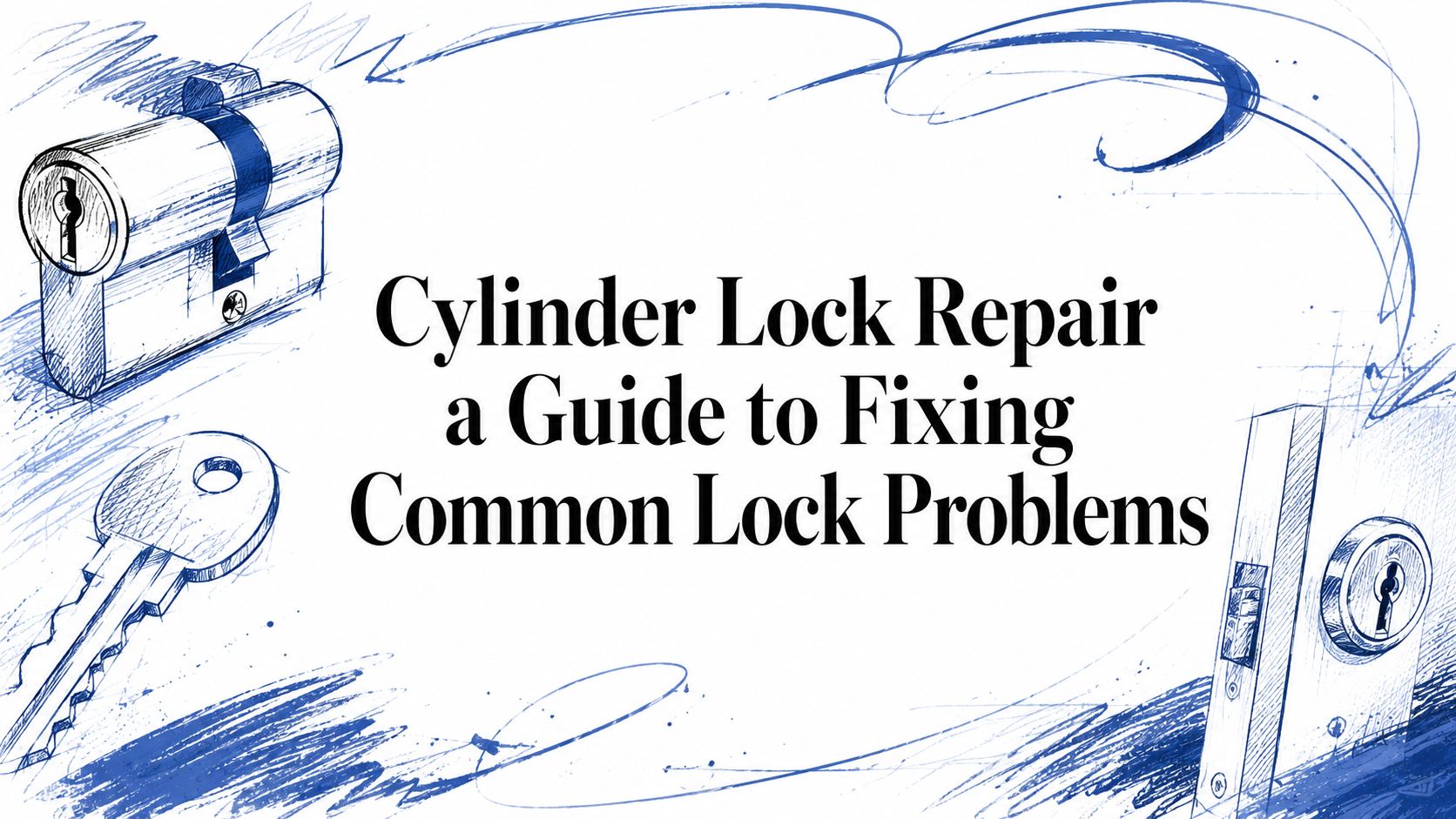
Cylinder Lock Repair a Guide to Fixing Common Lock Problems
You know the moment. The key goes in, feels wrong, and then stops halfway or won't turn at all. Sometimes the lock worked fine yesterday, then today it's stiff, sticky, or spinning like it's disconnected from the door. That's when cylinder lock repair becomes less about a broken keyhole and more about figuring out what's failing in the door, the hardware, or the cylinder itself.
A cylinder lock is a small part with a big job. It controls access, protects the latch, and keeps a door usable day after day. When it starts acting up, the trick is to avoid guessing, because forcing the wrong fix can turn a simple repair into a replacement.
Table of Contents
- That Frustrating Moment Your Key Wont Turn
- Common Symptoms and Causes of Cylinder Lock Failure
- Safe DIY Troubleshooting Steps for Your Cylinder Lock
- Signs You Need a Professional Locksmith Immediately
- The Professional Repair Process and Typical Costs
- Your Local Minneapolis Saint Paul Locksmith Solution
That Frustrating Moment Your Key Wont Turn
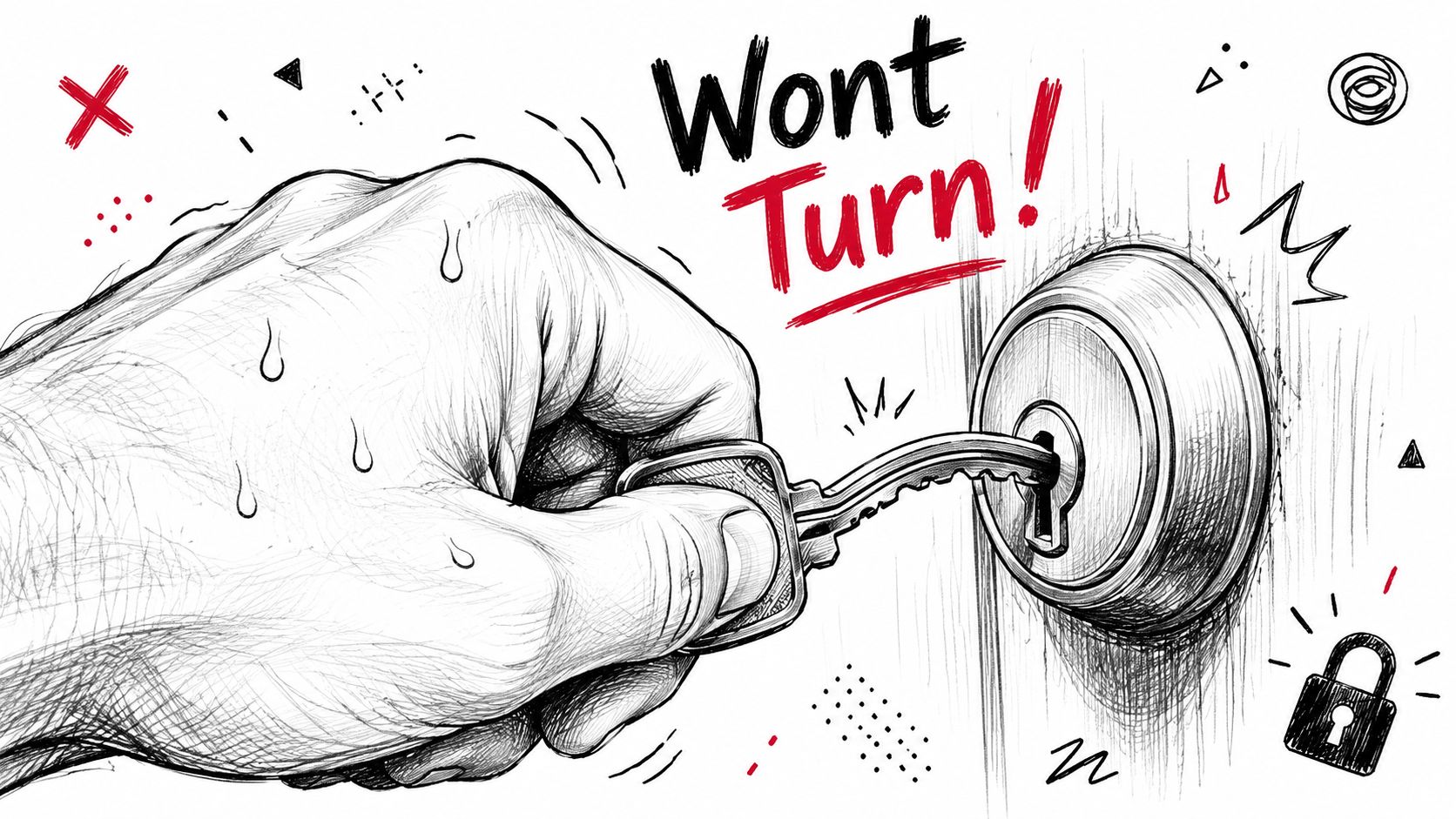
A homeowner can stand at the door, groceries in one hand, and feel that tiny jolt of panic when the key stops dead. The key may insert partway, resist on the last turn, or slide in and refuse to budge. That single failure can make the whole door feel unreliable.
In many homes, that's the first sign that cylinder lock repair is needed, not because the whole lock is destroyed, but because the mechanism has developed friction, wear, or alignment trouble. Minnesota's occupational data even tracks the trade as part of a distinct locksmith occupation that includes repairing, opening, and changing locks, which shows how established this work is as a professional service rather than a quick patch job Minnesota occupational employment data.
A stubborn key is often a symptom, not the whole problem.
The practical question is simple. Can the lock be cleaned, adjusted, or rekeyed, or is the cylinder worn enough that replacement makes more sense? That decision depends on the symptoms, the door hardware, and how far the internal parts have drifted from proper alignment.
Common Symptoms and Causes of Cylinder Lock Failure
What the lock is telling you
A failing cylinder usually gives warning signs before it stops working altogether. A key may need extra pressure, the cylinder may feel gritty, or the turn may feel uneven from start to finish. Sometimes the key inserts normally, but the bolt does not move the way it should.
Those symptoms often come from dirt, wear, or dry internal parts. Dust in the keyway, bent key teeth, tired pins, and a lack of proper lubrication can all make a lock feel sticky. Cleaning and using a dry lubricant can help when friction is the problem, but it will not fix internal parts that have already worn out or broken down.
Why the cylinder is not always the real culprit
The stronger diagnostic habit is to look beyond the cylinder itself. A misaligned strike plate, an incorrect tailpiece length, the wrong cam orientation, or hardware that has been tightened too much can make a healthy cylinder act faulty door system diagnosis guidance. A door that sags from loose hinges, a frame swollen by Minnesota humidity, or a strike plate shifted by house settling can all put pressure on the cylinder, making it feel broken. That is why a lock can seem defective when the actual issue sits in the door, frame, or installation.
If the door drags, shifts, or binds, the cylinder may be the messenger rather than the problem.
A locksmith looks at the whole assembly. Small changes in the door's fit can create intermittent failure, especially when the lock works one day and sticks the next. If the door is out of alignment, replacing the cylinder alone can leave the cause untouched, and the problem will come back. For homeowners comparing symptoms, the practical checks in this guide to common home lock issues and fixes for Minnesota residents help narrow down whether the issue is in the lock or in the door system.
Safe DIY Troubleshooting Steps for Your Cylinder Lock
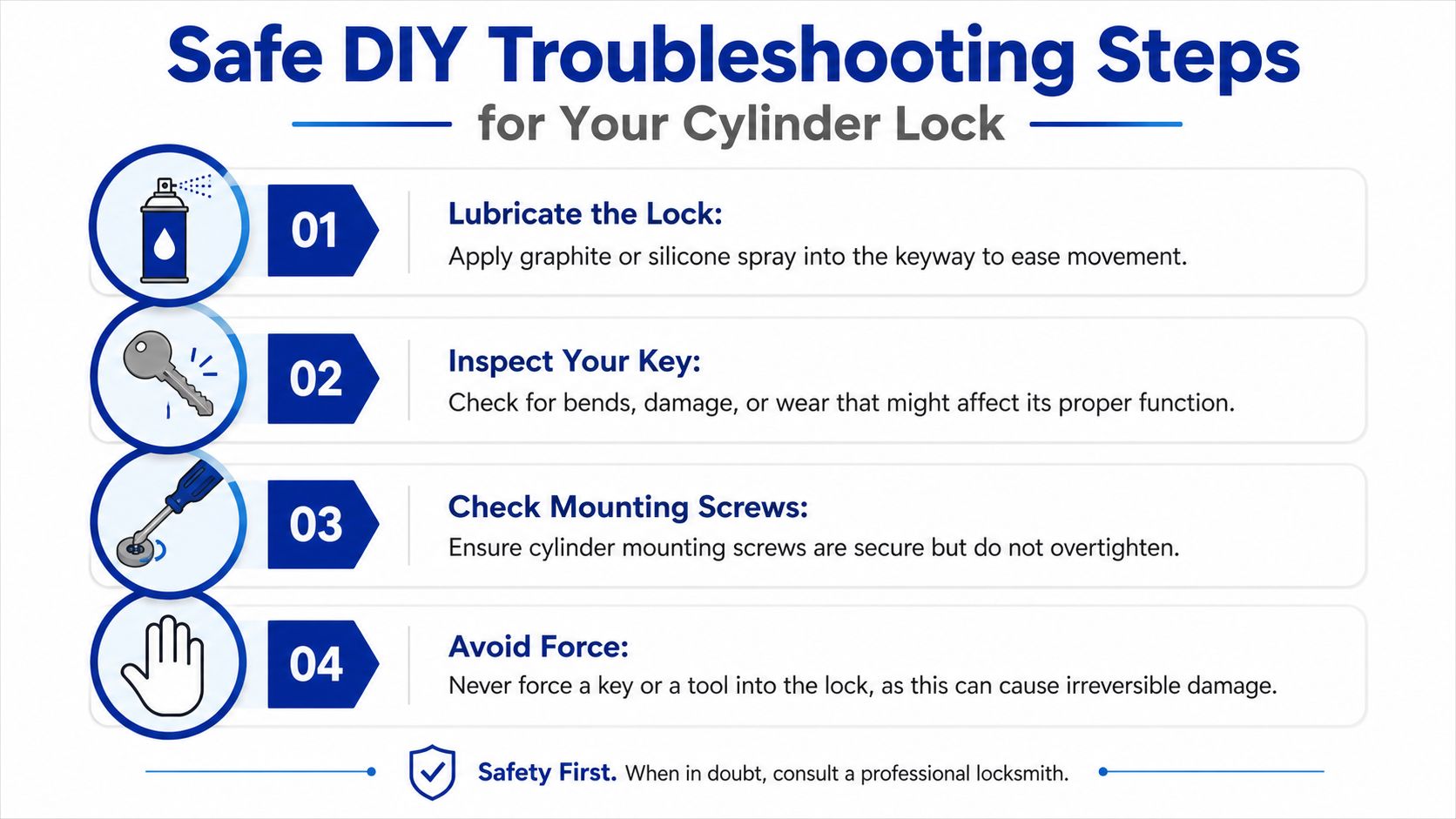
A sticky cylinder often starts with simple friction, dirt, or a key that is no longer cutting cleanly. Begin with the least aggressive fix, blow compressed air into the keyway to clear out dust and grit, then apply a dry lubricant such as graphite powder or a Teflon-based spray. That order matters because it lowers friction without leaving behind an oily film that can trap more debris.
If the lock still feels off, check the key itself. A bent, worn, or damaged key can make a healthy cylinder feel like it is failing, and a spare key shows whether the trouble follows the key or stays with the lock. While you are there, look at the surrounding hardware. Loose exterior screws or a shifted trim plate can move the lock body just enough to create binding, which is a door-system problem, not just a cylinder problem.
Use pressure only after diagnosis. Forcing a key can turn a workable repair into a broken lock.
For a wider homeowner check, the practical troubleshooting steps in this guide on common home lock issues and fixes for Minnesota residents follow the same logic, clean first, adjust second, replace only if the mechanism will not recover. That approach helps you separate a dirty or slightly misaligned lock from a cylinder that has worn internal parts, such as bent pins, weak springs, or a broken cam.
A good rule is to stop once the lock starts pushing back. If the key binds hard, the cylinder spins without engaging, or the hardware feels like it is fighting the door instead of securing it, leave the deeper repair to a locksmith. Over-tightening can create the exact binding you are trying to solve, and a proper diagnosis usually means checking the whole door assembly, not just the cylinder itself.
Signs You Need a Professional Locksmith Immediately
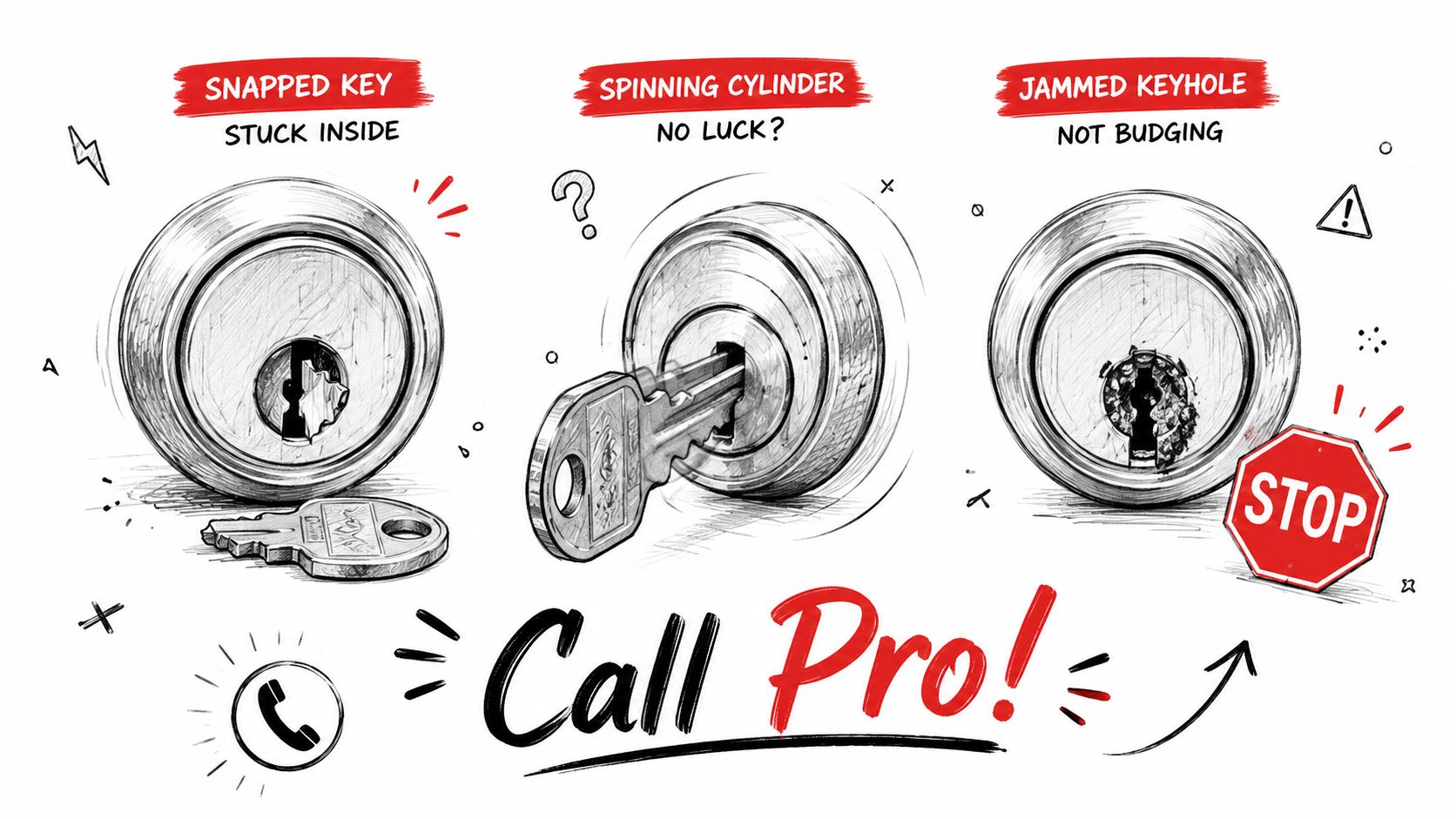
A broken key stuck in the lock is an immediate call for help. So is a cylinder that spins freely without moving the latch, because that often points to a failed internal cam or a disconnected mechanism. Those are not cleanup problems, they're hardware failures.
Visible tampering changes the decision fast. If the keyway looks damaged, the face of the cylinder is scarred, or the door has signs of a forced entry attempt, the lock shouldn't be trusted until it's been inspected and likely replaced. Security hardware that has already been compromised can't be treated like a simple sticky lock.
When to stop trying at home
- The key snapped inside the cylinder: Removal often needs the right extractor tools, and home methods can push the fragment deeper.
- The cylinder turns but nothing engages: That usually means the internal connection has failed, not that the key needs more effort.
- The lock stays seized after cleaning: If compressed air and dry lubricant don't change the feel, the problem is likely internal wear.
- The door shows tamper damage: A compromised lock should be evaluated before anyone relies on it again.
The safest choice is to call a locksmith before more force is used. A compromised cylinder can still look “almost fine” while failing under real use, and that's exactly when people get locked out at the worst possible time.
The Professional Repair Process and Typical Costs
A good locksmith starts by testing the whole door system, not just the cylinder. That means checking the key, keyway, mounting hardware, cam movement, and how the door sits in the frame before deciding whether repair, rekeying, or replacement is the smarter move. That diagnostic step prevents unnecessary parts swaps and catches problems that originate from the door or frame.
For many jobs, rekeying is the economical option when the hardware is still sound but the keying needs to change. Consumer and contractor pricing commonly places rekeying a single lock cylinder at $20 to $50 rekeying and replacement cost comparison. A full door lock cylinder replacement averages $275 to $317, with about $90 to $132 of that tied to labor. Those figures are a useful reference point, but the right choice still depends on the condition of the lock and the rest of the door.
That spread is why professionals do not jump straight to replacement. If the mechanism is basically healthy, rekeying or adjusting the door hardware can solve the problem without paying for a full assembly swap. If the cylinder is worn, damaged, or insecure, replacement is the better long-term answer. Why the cylinder is not always the culprit matters here. A misaligned strike plate, a sagging door, or loose hardware can make a good cylinder feel bad, and replacing the lock alone would leave the underlying issue in place.
How a locksmith decides
The right repair restores access and preserves security without overspending on parts.
The decision usually comes down to three questions. Is the cylinder mechanically sound, is the door aligned, and is the existing hardware still secure enough to keep? A full replacement makes sense when the internal parts are damaged or the lock has reached the point where repair would only delay the next failure. If the problem is coming from the door setup rather than the cylinder itself, the fix may be an adjustment, a rekey, or a smaller part replacement instead of a full swap.
For readers comparing repair to replacement, this guide on rekeying locks versus replacing them is a useful starting point. It covers the trade-offs that come up most often on site, especially when the question is whether to keep usable hardware or start fresh with new components.
Your Local Minneapolis Saint Paul Locksmith Solution

If you're in the Twin Cities and the lock still isn't behaving after basic troubleshooting, a local locksmith can diagnose the door as a system instead of guessing at the cylinder. Mena's Key offers mobile locksmith service across Minneapolis, Saint Paul, and nearby suburbs, and its service pages include Minneapolis lock and key service for homeowners, renters, and property managers who need on-site help.
That matters because many failures aren't solved by parts alone. A proper visit can confirm whether the issue is wear, misalignment, or a cylinder that's reached the end of its useful life, then handle the repair or replacement without unnecessary damage.
Mena's Key also lists lock repair among its locksmith services, so it's a practical option when a lock is sticking, jammed, or no longer reliable. If you're dealing with a lockout, a damaged cylinder, or a door that only works when you jiggle the key, getting a mobile technician on site is the fastest way to restore normal use.
If your cylinder lock is sticking, spinning, or refusing to turn, contact Mena's Key for a professional diagnosis and on-site service in the Minneapolis Saint Paul area.