Locksmith Pricing Guide: What Twin Cities Customers Pay
A standard residential locksmith visit in the Minneapolis–Saint Paul area typically runs $75 to $200 during business hours, and after-hours or emergency calls commonly add $75 to $200 in urgency premiums on top of the base service fee. That's why the final bill can jump fast when the door won't open at 10 p.m. and the tech has to leave immediately.
You're probably staring at a locked door, a lost key, or a landlord headache and trying to figure out whether the quote you got is fair. Don't chase a single “average locksmith cost.” Chase an itemized estimate that tells you what you're paying for.
Table of Contents
- Why Locksmith Quotes Vary So Much
- Typical Locksmith Service Cost Ranges
- What You Actually Pay For on a Locksmith Invoice
- How Modern Keys and Smart Locks Change the Price
- Red Flags and How to Get an Accurate Quote
- Money-Saving Tips for Twin Cities Homeowners and Businesses
- Planning Your Next Locksmith Call with Confidence
Why Locksmith Quotes Vary So Much
A renter in Bloomington gets locked out after work. A landlord in Brooklyn Park needs a full rekey after a tenant move-out. Those jobs sound related, but they're not priced the same, and they shouldn't be. Time of day, service type, hardware complexity, and travel distance all shape the number that shows up on the invoice.
The big mistake is treating locksmith work like it has one normal price. It doesn't. A daytime house lockout is one thing, a rekey is another, and a smart lock or push-to-start key is a different animal entirely. The market has long recognized that after-hours work costs more, with a 2022 national survey showing an average $85 residential service call during regular business hours versus $128 after hours, a $43 spread or about 50.6% more for after-hours work (Locksmith Ledger survey).
The job, not just the lock, drives the price
If the locksmith only has to open a standard house door, the labor is usually straightforward. If the lock is high-security, the key is broken off inside, or the technician has to deal with a modern electronic system, the quote moves up. That's why broad consumer guides still show house lockout services around $75 to $200+ and emergency work priced higher than daytime calls (Locksmith Ledger survey).
Practical rule: If two quotes look wildly different, one of them is probably missing a line item. A quote that leaves out urgency, travel, or parts is not a better quote, it's an incomplete one.
That's the mindset you want. Don't ask, “What's the average locksmith cost?” Ask, “What will I owe when the technician finishes?” That simple shift protects your wallet far better than chasing the cheapest phone number.
Typical Locksmith Service Cost Ranges
A lockout at the front door, a simple rekey, and a full hardware swap do not belong in the same price bucket. If you want a real locksmith pricing guide, start by sorting the job type first, then compare the line items that should appear on the invoice. That is the cleanest way to avoid overpaying for a quote that looks low only because it leaves out travel, urgency, or parts.
| Locksmith Service Cost Ranges at a Glance | Typical Cost Range | Key Cost Drivers |
|---|---|---|
| Residential lockout | $75 to $200+ | Time of day, lock type, urgency, travel |
| Rekeying | $50 to $130 per lock, or $25 to $45 per cylinder in granular pricing guides | Number of cylinders, whether the hardware stays, key count |
| Lock replacement or new lock installation | $100 to $300, sometimes $150 to $500+ | Hardware grade, door prep, complexity, security level |
| Commercial rekeying | $25 to $45 per cylinder | Cylinder count, access requirements, building type |
| Master key system setup | About $31 in one survey | Key hierarchy, documentation, lock layout |
| Electronic lock programming | About $123 | Software setup, hardware compatibility, programming time |
| Wireless electric lock or touchless actuator upgrade | $224 to $287 | Electronic hardware, install time, configuration |
| Emergency or after-hours service | Often adds $75 to $200 in urgency premiums | Night response, weekend availability, weather, mileage |
The spread is the point. Rekeying is usually the lower-cost security reset because the hardware stays in place. Full replacement costs more because you are buying the lock itself, not just changing what works inside it. National pricing guides put new lock installation in the $100 to $300 range, and more complex jobs can climb to $150 to $500+ depending on the hardware and how much work the door needs (Angi pricing guide).
What those numbers mean in real life
A homeowner swapping one worn deadbolt is paying for a different job than a property manager rekeying several doors after a tenant change. The first is a straightforward hardware replacement. The second is a key control job, and that changes how the invoice should be read.
Commercial and rekey pricing is often broken out by cylinder, which is why a flat quote can obscure the final cost. A survey breakdown from CLK Supplies price survey breakdown shows how labor, cylinder count, and job type push the total in different directions. Master key work and electronic programming sit in their own category for the same reason. They take planning, not just wrench time.
Use this as your filter. A good quote tells you whether you are paying for labor, parts, or both. If the lock is still in good shape, rekeying is usually the better wallet move. If the hardware is tired, damaged, or outdated, replacement makes more sense. If the system is electronic, programming and compatibility matter just as much as the install itself.
Budget rule: A fair quote separates the door work from the hardware work. If the company will not say which part is which, you do not have enough information to compare it against another bidder.
What You Actually Pay For on a Locksmith Invoice
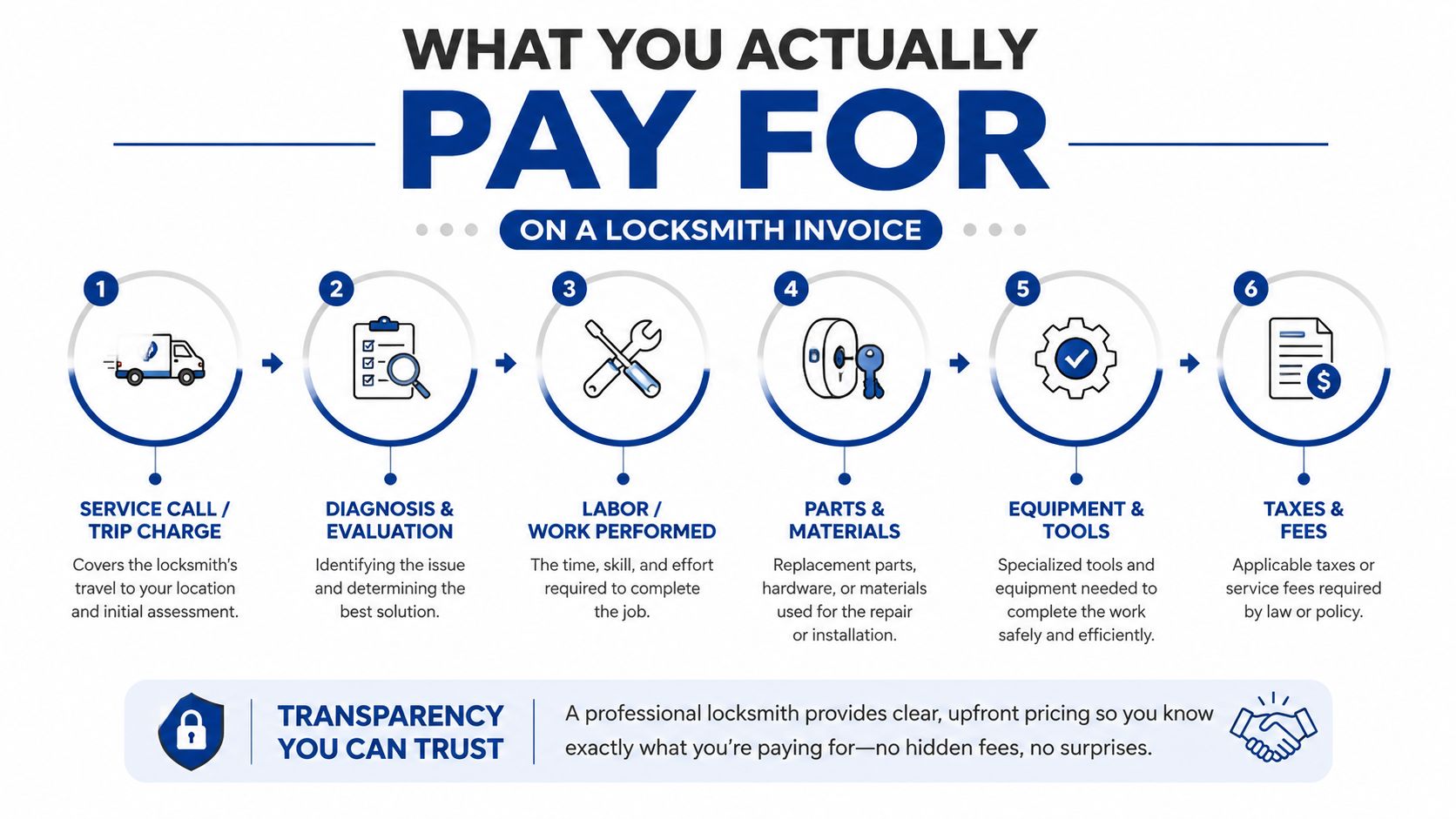
A phone quote can look tidy and still leave out the actual cost. The invoice is the part that matters. It should show the service call, the labor, the parts, any urgency surcharge, and travel if the company charges for it. If those pieces are missing, you are not comparing quotes, you are guessing.
The line items you should expect
Service call fee. This is the cost of getting the locksmith to your door. Some companies bundle travel and dispatch into it, some list it separately, but it should appear somewhere on the bill. Normal-hours service often starts in the $50 to $100 range for this part of the job, so a quote that looks unusually low is often incomplete.
Labor. This is the actual work on the lock, cylinder, or vehicle. Residential and commercial rekeying is often priced by cylinder, commonly around $25 to $45 per cylinder, which tells you the labor line can change fast once more than one lock is involved (CLK Supplies survey).
Parts and hardware. New deadbolts, replacement cylinders, electronic components, and key blanks all belong in this line. National pricing guides put new lock installation around $100 to $300, and sometimes $150 to $500+, because the hardware itself can drive the total up quickly (Angi pricing guide).
Urgency surcharge. After-hours and emergency calls cost more because the tech is on call, the truck is running at odd hours, and you are paying for immediate response. A national survey showed $85 for a daytime residential service call versus $128 after hours, which is the kind of gap you should expect to see on the invoice if the call is not routine (Locksmith Ledger survey).
Travel or mileage. Some companies add a travel fee, often around $20 to $50 in guides that separate it out. If your property sits outside the core service area, get that number before dispatch. Otherwise the bill can grow after the truck is already on the way.
A fair invoice separates what the locksmith did from what the hardware cost. If the shop will not break out labor, parts, and service call charges, you cannot compare that quote against another one in any honest way.
Ask for the quote in writing, and ask whether the service call is waived if the work goes forward. If the answer changes once the technician arrives, stop and get a new approval before they touch the lock.
How Modern Keys and Smart Locks Change the Price
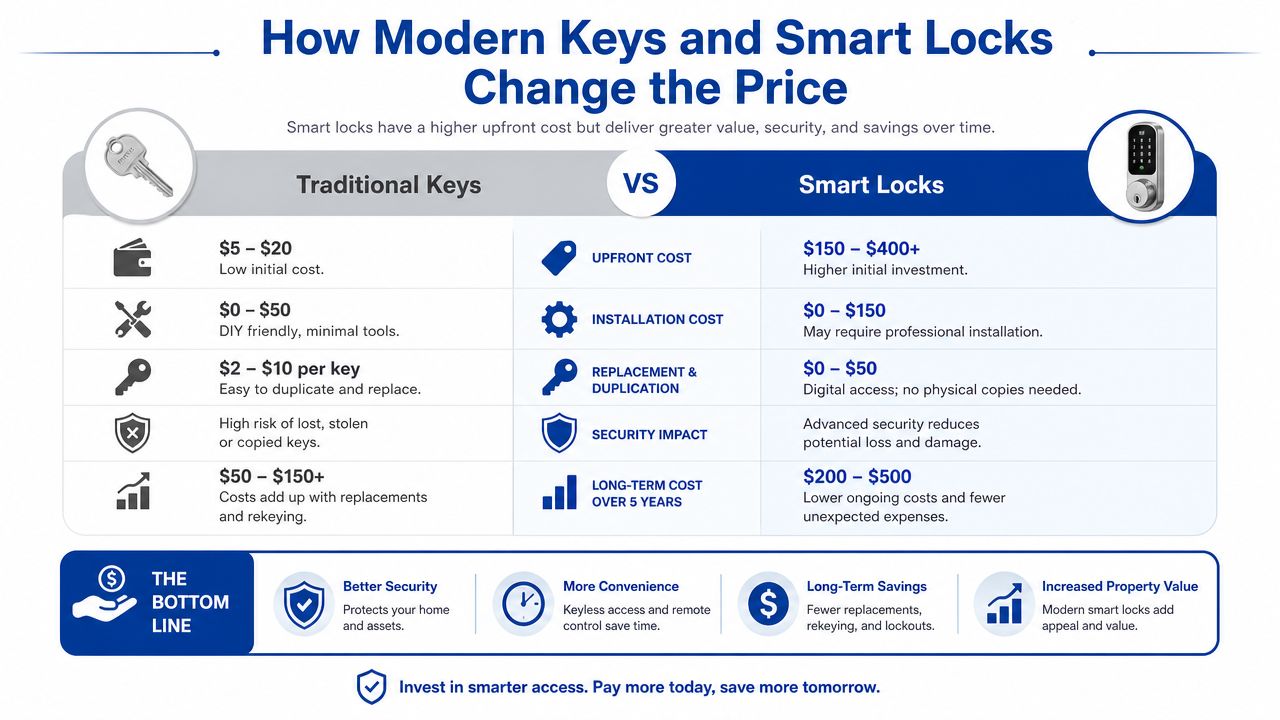
A basic house key job and a modern smart entry job are priced for different kinds of work. A standard rekey is mostly mechanical. A push-to-start fob, wireless electric lock, or touchless actuator upgrade brings in programming, electronic parts, and compatibility checks. That is why the total climbs fast once the job stops being simple hardware work.
The invoice changes because the locksmith is not just cutting metal or swapping a cylinder. Electronic systems demand the right tools, the right programming process, and the right authorization so the device works after the visit. Newer vehicle keys and commercial access systems usually cost more for that reason. The price is driven by setup, compatibility, and verification, not just time on site.
Recent pricing guides show electronic lock programming around $123 and wireless electric lock or touchless actuator upgrades around $224 to $287 in granular access-control pricing. Broader national guides also put new lock installation at $100 to $300, with some jobs reaching $150 to $500+ depending on hardware and complexity.
Why digital access costs more
The extra cost is not just labor. The technician needs specialty tools, programming software or workflows, and in many cases proof that the person requesting the work has the authority to make the change. That is true for newer vehicle keys and for commercial electronic entry systems. The more digital the system becomes, the more the quote depends on setup, compatibility, and verification.
A newer vehicle key replacement can cost far more than a simple lockout because the job includes the blank, the programming, and the hardware tied to the vehicle's system. Pricing guides consistently show basic residential or automotive work at the lower end, while push-to-start or fob-style replacement runs much higher because the key and the programming are part of the same service. More electronics means more variables, and more variables mean a higher invoice.
Break the work into the right buckets before you compare quotes.
- Mechanical work: rekeying, standard lock repair, basic deadbolt replacement.
- Programming work: transponder keys, smart fobs, electronic locks.
- Hybrid jobs: the lock or key has hardware plus software, so both sides affect the price.
That split matters because a house lockout and a coded access job are not the same service. If the work involves a programmed key or connected hardware, the technician is bringing programming gear and making the system talk to that hardware, not just using hand tools.
Red Flags and How to Get an Accurate Quote
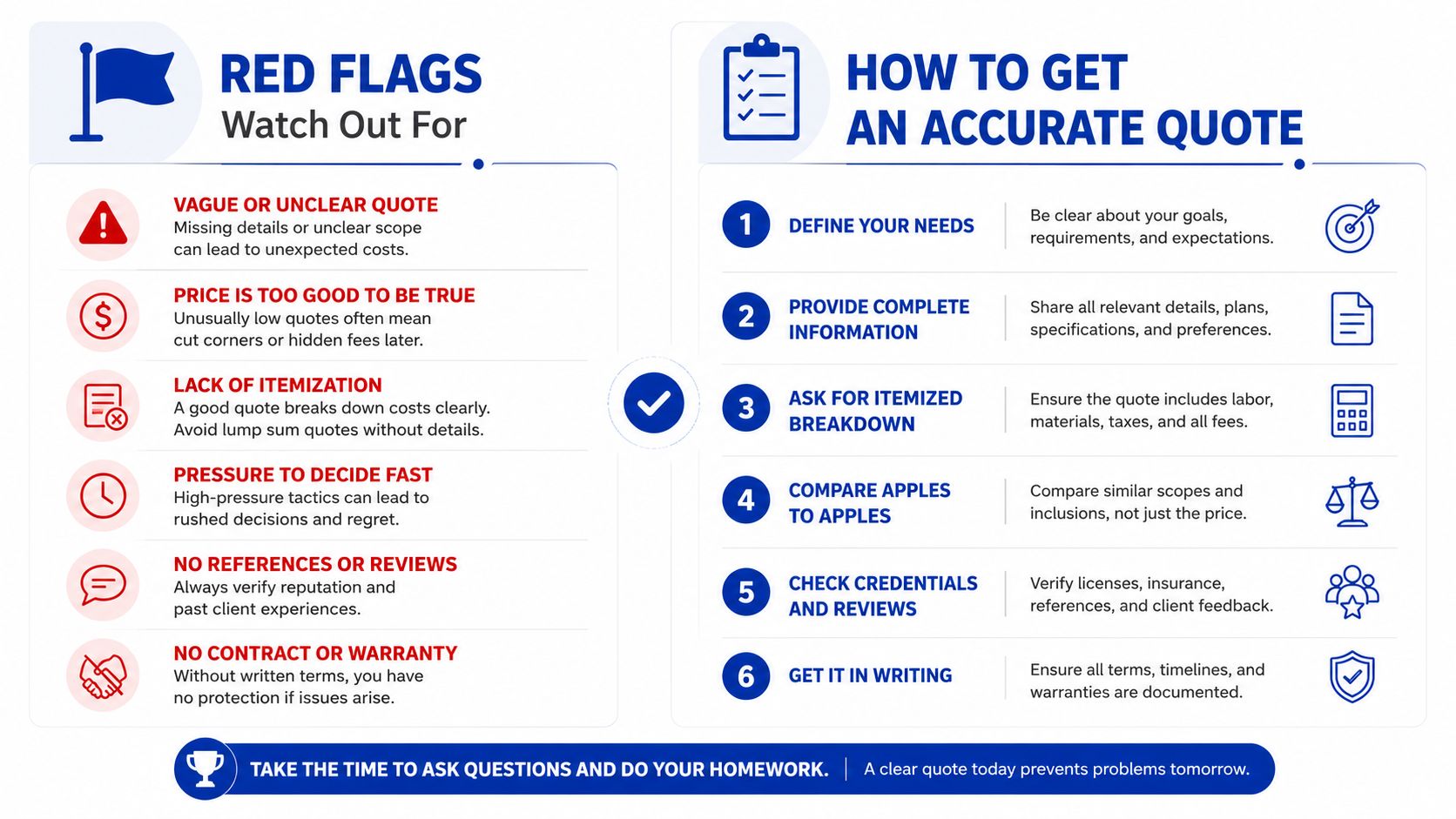
A fair locksmith quote starts with a clear description from you and a straight answer from the company. If the phone price sounds suspiciously low, if they won't put anything in writing, or if the truck shows up with surprise fees, walk away. Those are the same tactics that turn a simple call into a painful invoice.
What to ask before anyone is dispatched
Describe the exact job. Say whether it's a lockout, rekey, replacement, car key, or electronic lock issue. If you know the brand, say it.
Ask for itemized pricing. You want the service call, labor, parts, urgency surcharge, and travel spelled out.
Confirm the estimate range. A reputable company gives a range before dispatch and explains what could move the total.
Ask about payment and proof. A real operator should be able to confirm identity, provide a written estimate, and explain the final invoice before work starts.
Get the price change rule. If the technician finds unexpected damage or a higher-security lock, ask what happens before extra work begins.
The warning signs
- Suspiciously low phone quotes. If the price sounds unreal, it usually is.
- Refusal to itemize. A quote that hides parts or urgency isn't transparent.
- Cash-only pressure. That's a bad sign when the invoice is large and the job is straightforward.
- No clear identity. Unclear company name, no marked vehicle, or no proper paperwork should make you pause.
If the quote changes on arrival, the correct response is simple. Stop the work, ask what changed, and get approval for the new total before the tech continues.
That's the standard you should hold any provider to. Transparent pricing is not a luxury in locksmith work, it's the minimum.
Money-Saving Tips for Twin Cities Homeowners and Businesses
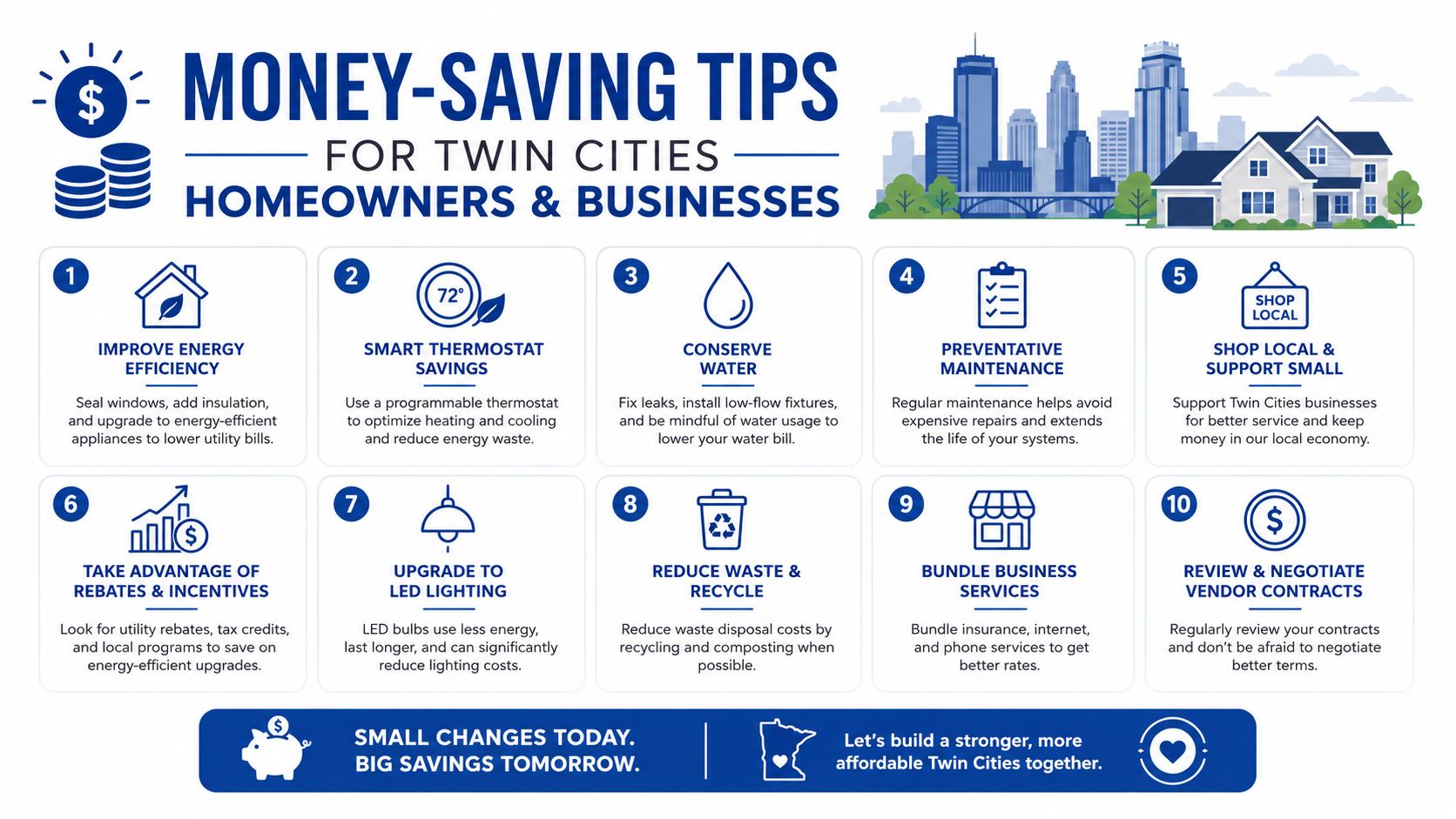
A smart Twin Cities customer starts by buying only the work that solves the problem. If the hardware still turns smoothly and the lock body is sound, rekeying usually costs less than replacement. Full replacement belongs on the table only when the lock is worn out, damaged, or too outdated to trust. That is the cleanest way to keep a locksmith invoice from ballooning for no reason. Local quotes also get easier to compare when you separate the service call, labor, parts, travel, and any urgency surcharge instead of staring at one flat number. For a straightforward quote from a locally owned team, check Mena's Key.
Make the job simpler before the tech arrives
Book during normal business hours if you can. After-hours calls cost more because the service call changes first, then the labor follows. National pricing guides have shown that gap clearly, so the easiest savings often come from choosing a daytime appointment.
Bundle the work into one visit. If you have multiple locks, handles, or cylinders that need attention, it is usually cheaper to have them handled together than to pay separate dispatch fees later. That matters in older Twin Cities homes with several exterior doors, side entries, and garage access points.
Keep spare keys in secure places. A backed-up key beats an emergency lockout every time. It is a simple habit, and it protects your wallet when the weather is bad, the schedule is tight, or the office door closes behind you.
Tell the tech exactly what you have. If the lock is electronic, high-security, part of a master-key system, or tied to access control, say so before anyone rolls. Surprise complexity is where quotes drift upward, and nobody should be paying for guesswork.
Use the right key strategy for the property. Homeowners often save money by rekeying after a move, while businesses usually do better by planning access changes ahead of a turnover or remodel. That keeps the invoice focused on the actual problem instead of adding unnecessary hardware.
Landlords, managers, and business owners
Master key systems can cut down the churn that comes with move-outs, maintenance calls, and staff changes. Better planning creates the savings, not some magic price break. When access is mapped cleanly, the technician spends less time reworking the same building, and you avoid paying for repeated callbacks.
For small businesses, the cheapest emergency is the one that never happens. Sticky deadbolts, worn closers, failing keypads, and tired commercial hardware always show up at the worst possible moment. A scheduled inspection costs less than a rushed night call, and it keeps urgency pricing off the invoice. Property managers in the metro should also treat access changes like a routine operating cost, not a scramble after keys go missing. That mindset saves money because it lets you compare line items before anyone starts drilling, replacing, or reprogramming hardware.
Planning Your Next Locksmith Call with Confidence
The right call is the one with the clearest price, not the flashiest ad. Time of day, service type, hardware, and travel are the main drivers, and an honest quote should separate those pieces instead of hiding them inside a flat-rate slogan. If the job is mechanical, keep it mechanical. If it's electronic, expect programming to matter.
Use the same checklist every time. Ask for an itemized estimate, verify what's included, and refuse surprise add-ons without approval. That's how you compare quotes fairly and protect yourself from bait-and-switch pricing.
For a locally owned, 24/7 mobile option across Brooklyn Center, Brooklyn Park, Blaine, Bloomington, and the wider metro, visit Mena's Key for free phone or online quotes, trained technicians, and upfront estimates that match the standards laid out here.
Need lockout help, rekeying, or a clearer estimate before you book? Mena's Key gives Twin Cities customers straightforward quotes and mobile service when the timing matters. If you want a locksmith who explains the line items before the truck rolls, reach out and get a quote that's built to compare, not to confuse.