Cheap Car Keys: Smart Ways to Save on Replacements
You're standing next to a locked car, staring at a key that snapped, vanished, or stopped talking to the ignition. You don't need a lecture. You need to know how fast you can get back on the road, what it's going to cost, and which “cheap” option won't waste your time and money.
The bad news is that the sticker price on a car key is often a trap. The total cost includes cutting, programming, compatibility checks, and the risk of having to do it twice. The good news is that there's a sensible way to buy cheap car keys without getting burned, and it starts with choosing the cheapest path to a working key, not the lowest number on a website.
Table of Contents
- The Moment You Realize Your Car Key Is Gone
- Understanding the Key Types and What They Cost
- Comparing Your Four Replacement Routes
- Step-by-Step Replacement and Programming Workflow
- Hidden Costs That Make a Cheap Key Expensive
- Red Flags and Common Scams to Avoid
- Working With a Local Mobile Locksmith in the Twin Cities
- Choosing the Cheapest Path That Works
The Moment You Realize Your Car Key Is Gone
It usually happens on an ordinary day, which makes it worse. You're in a parking lot after work, at a trailhead with groceries in the back, or leaving a late shift when your hand goes to your pocket and comes back empty. The phone is in your hand a second later, and the search changes from “Where did I leave it?” to “What's the cheapest way to fix this today?”
That's the right question. The wrong one is, “Where can I get the lowest advertised price?” A key that's cheap on paper but can't be programmed, won't match the frequency, or needs a second trip isn't cheap at all.
Practical rule: the cheapest quote is useless if it doesn't get you a key that opens the door and starts the car.
The decision usually comes down to four paths. A dealership can supply the exact part and full programming support, but you'll pay for that certainty. An independent automotive locksmith can often do the same job for less and come to you. Online aftermarket sellers can save money if you already know the correct blank, frequency, and chip family. DIY only makes sense on older, chipless vehicles or very limited cases where the vehicle supports self-programming.
The stranded-driver math is simple. You're not shopping for a key blank. You're buying access, mobility, and a clean fix that doesn't create a second problem later.
Understanding the Key Types and What They Cost
A car key is only cheap when the car still treats it like a simple piece of cut metal. Once the key has to talk to the immobilizer, you are paying for the chip, the pairing, and the programming, not just the blade. That is why older mechanical keys stay at the bottom of the price ladder, while newer systems climb fast.
A basic mechanical blade key is still the lowest-cost type. Industry guidance places cut-only blade keys around $45 to $85 when the vehicle still supports that setup, and market reporting shows very basic mechanical keys at the low end of the market around $10 to $35 (Alibaba automotive key market report, cheapest car key type guide). A transponder key adds an immobilizer chip, so the key has to be matched to the anti-theft system. That pushes typical replacement cost into the $120 to $200 range in one guide and roughly $75 to $220 in broader market coverage.
A remote-head key sits in the middle because the blade and electronics are built into one unit. A smart or proximity fob is the expensive end of the scale, with market data putting replacements at roughly $280 to $550+ (Alibaba automotive key market report). That cost is not random markup. It reflects the electronics, the pairing work, and the fact that the vehicle will reject the wrong part.
| Car Key Types and Typical Replacement Cost Ranges | |||
|---|---|---|---|
| Key Type | Typical Cost Range | Programming Required | Common Vehicles |
| Basic mechanical blade | $10 to $35 or roughly $45 to $85 depending on service path | No on older vehicles | Older cars, trucks, chipless backups |
| Transponder key | $75 to $220 or roughly $120 to $200 | Yes | Most mainstream modern vehicles |
| Remote-head key | Higher than a basic transponder key | Usually yes | Vehicles with built-in remote buttons |
| Smart or proximity fob | $280 to $550+ | Yes | Push-button start vehicles |
If your car has a push-button start, stop chasing the cheapest blank you can find. You need the correct electronics first, then you can judge price.
The main point is straightforward. For older vehicles, affordable keys can be genuinely low-cost. For cars with immobilizers, remote start, or push-button ignition, the initial price is rarely the final cost. Cutting, programming, and potential rework determine whether the key remains affordable or becomes a secondary expense.
Comparing Your Four Replacement Routes
The dealer route buys certainty, but you pay for the badge and the process. If your car is under tight factory security or the immobilizer system is locked down, the dealer may be the cleanest path. The trade-off is obvious. You're usually giving up speed and price to get direct access to manufacturer-specific programming.
An independent automotive locksmith is where most stranded drivers should start. A competent locksmith can cut, program, and test the key on-site, which saves time and usually undercuts dealer pricing for the same working result. For basic transponder replacement, the practical market range in the US is often about $200 to $350 for independent locksmith options, which is still a lot less painful than dealer quotes in many cases (UK and US replacement pricing report).
Aftermarket online sellers look cheap because the part price is low. That can work if you already know the exact blank, chip family, and remote frequency. It goes sideways fast when the part number is wrong, the frequency doesn't match, or the seller's “compatible” claim turns out to be optimistic. The savings vanish the moment you pay for shipping twice or pay a technician to fix a bad purchase.
DIY is the narrowest lane. It makes sense on older chipless vehicles, or when the car supports a straightforward self-programming procedure and you already have the correct blank. It is a terrible bet for lost-all-keys situations on modern cars, because a mistake doesn't just waste money, it leaves you still stranded.
The honest ranking is this. If you need it done today, use a locksmith. If your car is older and simple, DIY or a kiosk can be fine. If you have time and the exact part number, online can save money. If the vehicle is picky or factory-locked, pay the dealer and move on.
Step-by-Step Replacement and Programming Workflow
A competent job starts with ownership, not tools. Bring photo ID, registration, and if possible the title or whatever your state accepts as proof that the car is yours. A legitimate technician should ask for the VIN and the exact year, make, and model before they quote the job, because guessing at key family, frequency, or immobilizer type is how cheap jobs turn into expensive ones.
Next comes identification. The blade has to be cut correctly, and the electronics have to match the vehicle. That means checking the blank style, the transponder family, and the remote frequency before anyone starts programming. A mismatch can leave you with a key that turns in the door but won't start the engine, or a remote that does nothing even though the blade is perfect.
Practical rule: if the seller or technician skips VIN verification and part matching, the quote is too sloppy to trust.
The programming step depends on the vehicle. Some cars allow on-board programming, which uses a specific ignition or button sequence to add a key. Others require dealer-grade diagnostics or a scan tool that talks to the immobilizer and security modules. After that, the technician should test every function, not just whether the engine starts. Doors, trunk, panic button, and remote lock or remote operation all need to work before you leave.
The basic workflow looks like this:
- Confirm ownership. No paperwork, no legitimate work.
- Pull the VIN. That narrows the key family.
- Match the blank and frequency. Cheap mistakes often happen here.
- Cut the blade. A cut key that's wrong by a hair can still fail.
- Program the transponder or fob. The car has to accept it.
- Test every function. Don't stop at “it starts.”
- Save the spare plan. If you now have one working key, get a second before you need it.
The best locksmiths make this look boring. That's a good sign. Boring means the part matched, the programming stuck, and you're not coming back tomorrow.
Hidden Costs That Make a Cheap Key Expensive
A cheap blank looks like a bargain until the bill shows up at the vehicle. Cutting is only part of the job. The bigger cost is usually programming, because the car has to accept the key before it will start, and that step depends on the immobilizer and security system working with the new part.
Compatibility failure is another common trap. A key can be cut correctly and still fail if the remote frequency does not match the market the vehicle was built for. Practical buying guidance notes that US-market vehicles commonly use 315 MHz remotes, while EU models often use 433.92 MHz, and a mismatch can leave you with a key that fits the door but does nothing for the remote functions (factory car keys compatibility guide). That is how a low sticker price turns into a useless part.
Shipping can erase the savings too. Online listings often show only the blank, not the wait. If you are locked out and need the car today, a delay of a few days is not savings, it is downtime that can push you into emergency service anyway.
Rework is where cheap keys really get expensive. If a non-OEM key fails after the job is supposed to be finished, you pay for diagnosis, possibly another blank, and usually another round of programming. Market coverage of replacement costs makes the same point plainly, basic mechanical keys stay inexpensive, but smart and transponder systems cost more because the vehicle needs the right electronics, not just the right shape (automotive key market report).
A cheap key is only cheap when it works the first time. If it does not, the total cost climbs fast, and the low website price stops mattering.
Red Flags and Common Scams to Avoid
Lost-key customers are easy targets because they're stressed and short on time. The first red flag is a quote that sounds absurdly low with no breakdown. If the company won't tell you whether cutting, programming, service call, and testing are included, assume the low number is bait.
The next warning sign is weak identity. No physical address, a business profile that looks newly created, or a website that hides who will show up are all problems. A real locksmith should be able to explain what tools they use, what vehicle systems they support, and how they verify ownership before doing the work.
Watch the technician, too. An unmarked car, a cash-only demand, or pressure to drill the ignition before any diagnostics should make you stop the job. Drilling is not a default move. On many vehicles, it's a shortcut that creates extra damage and extra cost.
- Ask for an itemized quote: Cutting, programming, travel, and any after-hours fee should be separate.
- Ask about the vehicle tools: A legitimate auto locksmith should know whether they're using on-board procedures or diagnostic equipment.
- Check the registration details: If they can't explain who owns the business, walk away.
- Demand a final test: The key should open, lock, and start the car before you pay.
A scam is not a high price. It's a low quote that turns into a bigger bill after the truck arrives.
Working With a Local Mobile Locksmith in the Twin Cities
A mobile automotive locksmith earns the call when you're stuck and need a car key built where the car sits. That means cutting the blade on site, pairing the transponder or fob, and testing the result before the technician leaves. For a lost-key emergency, that usually beats waiting on a mailed part or sitting in a dealer lobby.
The smartest move is to have your details ready before you call. Give the VIN, the year, make, and model, the exact problem, and whether you still have one working key to clone from. If you lost the only key, say that clearly. It changes the job.
You should also ask three direct questions. What's the total price, what's the ETA, and what happens if the key doesn't program on the first try? A clean estimate matters more than a cheap verbal promise. If the company handles automotive lockouts, spare keys, and programming support, that's the kind of setup that can solve both the access problem and the replacement problem in one visit. For local service details, you can check Mena's Key and see whether the job fits your vehicle and location.
Practical rule: if you're in a parking lot with no spare, pay for the fastest legitimate fix, not the cheapest maybe.
Local coverage matters, too. A Twin Cities mobile shop can usually respond faster than a national call center that has to route the job through a generic dispatch system. That doesn't mean every local shop is equal. It means proximity, current tools, and clear pricing usually matter more than a glossy ad.
Choosing the Cheapest Path That Works
Start with two questions. How electronic is the car, and how fast do you need it fixed? Those two answers tell you most of what you need to know.
If the car is older and chipless, a hardware-store copy, kiosk, or simple DIY route can make sense. If you lost the only key on a modern vehicle, a mobile automotive locksmith is usually the right move because the job needs cutting, programming, and a same-day result. If you're patient and know the exact part number, aftermarket online can save money. If the immobilizer is locked to factory software or the vehicle is unusually picky, the dealer is the safer choice. For a broader cost breakdown across these options, see the comparison of replacement costs and cost factors.
The summary is simple:
- Older chipless vehicles: go cheap and simple.
- Modern lost-all-keys emergencies: use a mobile locksmith.
- Patient buyers with exact part numbers: online can work.
- Factory-locked security systems: pay the dealer and avoid rework.
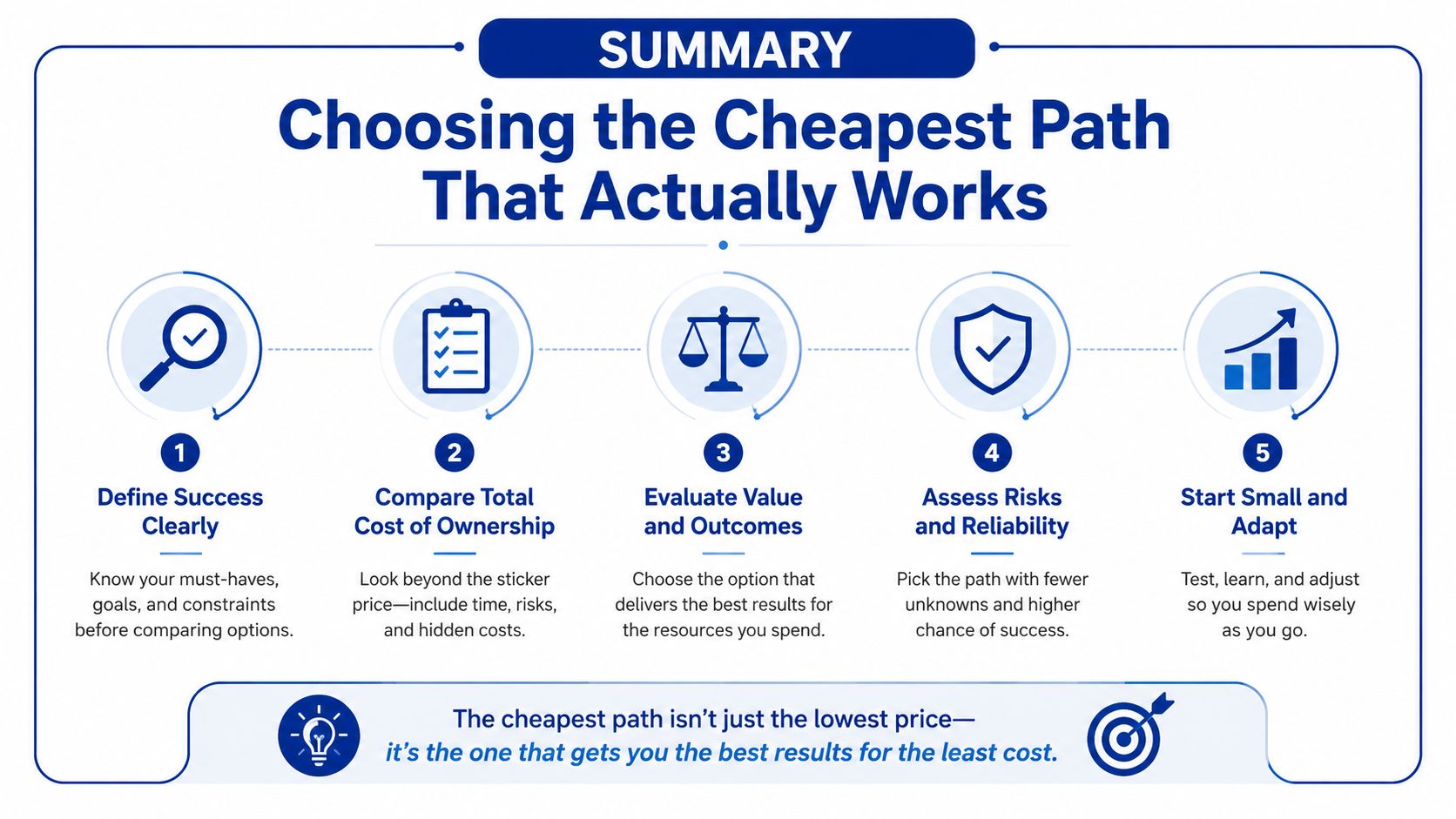
Keep this checklist on your phone before you need it, VIN ready, ID ready, written estimate in hand, exact key type confirmed, and a clear yes or no on whether the key will start the car. That is how you keep a “cheap” car key from turning into a second repair bill.
If a quote looks low because it only covers the blade or the fob shell, reject it. The price is the full path to a working key, cutting, programming, testing, and any second visit if the first attempt fails. A slightly higher upfront quote that includes the work is cheaper than a bargain quote that leaves you stranded again.
If you're dealing with a lost key, broken fob, or a car that won't accept a replacement, Mena's Key handles automotive lockouts and car key service across the Twin Cities with mobile, on-site work. Visit Mena's Key to request help and get a straight answer on the cheapest path that gets your car working again.