
Smart Lock Installation Guide for Minnesota Homes
You've got the old deadbolt in one hand, a smart lock in the other, and a Minnesota front door that doesn't care about your weekend plans. Maybe the key's sticking after a cold snap in Brooklyn Park, or the keypad you ordered looks simple online but your strike plate says otherwise once you open the package. That's the job here, getting a lock that works in a house that sees freeze, thaw, salt, and a lot of impatient arrivals.
The market tells the same story from a different angle. Residential applications accounted for 88.39% of U.S. smart lock revenue in 2025 in the U.S. smart lock market, which was valued at USD 3.36 billion in 2025 and projected to reach USD 6.03 billion by 2031 at a 9.22% CAGR from 2026 to 2031, according to Mordor Intelligence. Homeowners aren't treating this as a gadget anymore. They're treating it like a practical upgrade, and in Minnesota, practical is the only kind worth paying for.
Table of Contents
- Why Smart Lock Installation Matters in Minnesota
- Check Door Compatibility Before Installation
- Tools and Time for Smart Lock Installation
- Complete Smart Lock Installation Walkthrough
- Troubleshooting Smart Lock Installation Issues
- Minnesota Weather and Lock Security Backup
- Professional Smart Lock Installation by Mena's Key
Why Smart Lock Installation Matters in Minnesota
A homeowner in Brooklyn Park can leave for work with a door that seemed fine in the morning, then come home after dark to a deadbolt that feels stuck. That usually points to a shifted door, a strike plate cut too tight, or hardware that never handled seasonal movement very well. In Minnesota, cold weather turns those small fit problems into daily friction, so the lock on the door stops being background hardware and starts affecting how a home works.
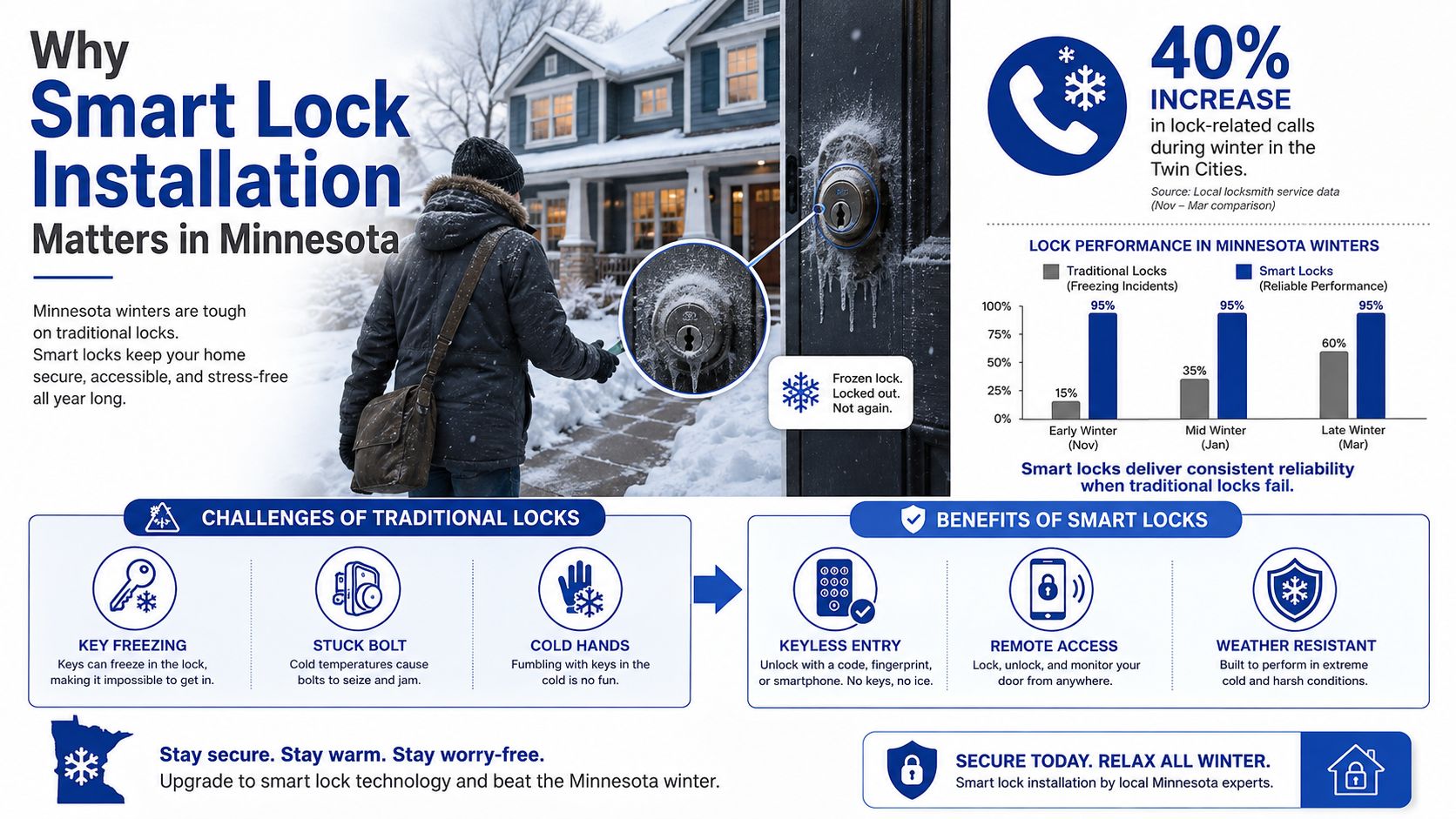
A smart lock can help, but only if the door it sits on is already honest about its condition. Minnesota homes deal with cold snaps, dry indoor heat, wind, and moisture, and those conditions expose weak latch alignment, worn deadbolts, and batteries that were already getting low. If the bolt drags or the strike plate sits out of line, winter makes that problem show up fast. The lock may be smart, but the door still has to fit.
What Minnesota changes
Cold weather does more than make the entryway uncomfortable. It puts old hardware, loose screws, and marginal door alignment under strain. A lock that feels acceptable in mild weather can start sticking once the temperature drops or the door swells and shrinks through the season.
That is why a smart lock install in Minnesota deserves more than a quick parts swap. If the deadbolt opening is rough, the latch lands off-center, or the interior trim leaves little room for the battery pack, the install can look complete and still fail in daily use. In my experience, those are the jobs that look easy from the bench and turn stubborn at the front door.
What this guide is really about
The key question is whether your specific door can take a smart lock cleanly, keep working through a Minnesota winter, and still give you a way in when the keypad, app, or battery does not cooperate. That is where planning matters more than brand names or marketing claims.
Homeowners also need an offline backup plan. A smart lock should still leave you with a mechanical key option, a trusted spare location, or another way to get inside if power, connectivity, or the battery fails at the wrong time. That kind of planning matters more here than in a milder climate, because a dead battery in January is not just inconvenient. It can become a lockout.
The article's focus is practical. Fit the door first, check the backup access second, and decide whether the hardware is worth trusting in a house that sees real winter stress. If the deadbolt already feels sticky, a smart lock will not fix the underlying problem by itself. The door has to cooperate before the technology can do its job.
Check Door Compatibility Before Installation
A smart lock retrofit starts with the door, not the box on the bench. Check the deadbolt bore, the latch pocket, and the strike plate before you drill, because a lock can be “compatible” on paper and still bind in the frame once it's mounted. In older Minnesota homes, that's common enough that I look for it before I talk about features.
Measure the hardware, not your patience
The existing deadbolt bore should line up cleanly so the bolt sits centered in the cross-bore. If the new strike plate is larger than the old cutout, it may need to be recessed or enlarged with a chisel, which is normal on a retrofit and not a sign that something's broken. Door thickness matters too, and the lock body still needs a clean cable path on the inside so the wiring isn't crushed when you tighten the plate.
A 1970s Minneapolis house is a good example. The door looked standard from the outside, but the bolt sat slightly off-center in the opening. That tiny offset made the deadbolt rub every time the owner tried to lock it, which is exactly the kind of problem that turns a Saturday install into a return trip to the hardware store.
The checklist that prevents most mistakes
- Deadbolt bore centered: The bolt should travel straight into the strike without scraping the edge.
- Latch pocket aligned: If the latch hits high or low, the lock may still turn but the door won't close smoothly.
- Strike plate fit: If it's too shallow or too small, adjust the cutout before blaming the lock body.
- Cable clearance: The interior wiring needs a clean path so it doesn't pinch when the backplate goes on.
- Door condition: A warped or swollen door needs correction first, not a smarter deadbolt.
If the door doesn't close cleanly with the old hardware, don't buy a smart lock and hope for the best.
That's the biggest money-saving move in this whole process. You're not just checking brand compatibility, you're checking whether the door will let the hardware work the way it's supposed to work.
Tools and Time for Smart Lock Installation
A first-time retrofit goes better when the work area is set up before the first screw comes out. Keep a drill, screwdrivers, tape measure, chisel, and pencil nearby, and lay a towel under the door to catch shavings and keep the finish from getting scratched. If the manufacturer app is part of the setup, download it before you start, not after the old deadbolt is already on the floor.
Build the workspace first
A clean bench or a cleared kitchen table is enough for most jobs. Put the lock parts out in the order they come out of the box, and keep the tiny screws together in a bowl or magnetic tray so they don't roll into a floor vent. That sounds obvious until you're kneeling on a cold entryway floor looking for one black screw in dim light.
Time is the thing people underestimate
A smart lock install is rarely a five-minute swap, especially the first time. A careful retrofit usually takes a chunk of a weekend morning because the fit has to be right before the electronics go live. Rushing is how people end up overtightening the interior assembly, forcing the tailpiece, or discovering the strike doesn't line up after the battery is already in.
Here's the practical mindset I tell homeowners to use. Treat the job like a mechanical fit project first and a tech setup second. The app won't fix a crooked bolt, and a fast install that binds is slower than a deliberate one that works the first time.
Good prep saves the lock from you. Most damage I see comes from tools used in a hurry, not from the smart lock itself.
If you'd rather not guess, this is also the point where a free quote from a local locksmith makes sense, especially if the door is older, painted over, or already showing signs of fit trouble.
Complete Smart Lock Installation Walkthrough
Start by removing the old deadbolt and strike plate. Once the door is clear, insert the new bolt with the “top” marking facing up, then mount the exterior keypad through the door so the exterior side sits flush and stable. The sequence matters because a sloppy start makes the rest of the hardware harder to align.
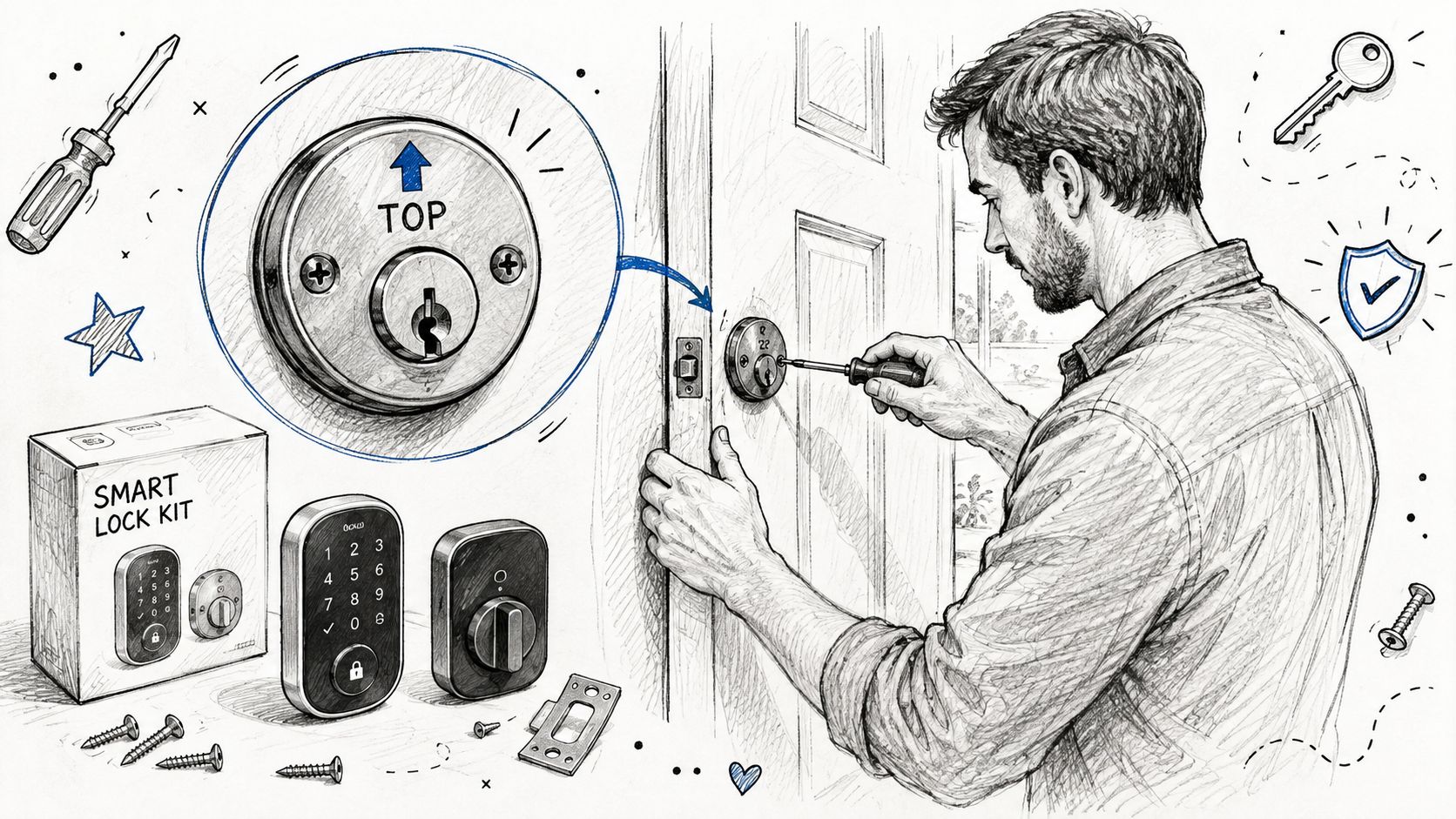
Next, route the internal cable cleanly through the backplate and secure the interior assembly without forcing it. People often get into trouble here. Independent installation guidance warns that the tailpiece must fully engage the latch and that hand-tightening matters because too much torque can warp the lock body and create binding, which is exactly the kind of problem that shows up after the door is closed, not during the bench test. That warning is in line with the practical sequence used in major installation guides like Lowe's smart lock install instructions.
After the body is seated, install the batteries and let the lock power up before you start pairing it. Then move to the app setup, if your lock uses one, and confirm the lock responds the way the manufacturer expects. Don't skip the physical test just because the app says it connected successfully.
The quality check happens with the door closed. The latch should extend and retract smoothly, and the door should engage the strike without rubbing or resistance. If you feel drag at this stage, stop and correct the alignment now. That one test tells you more than the package, the app, or the marketing copy ever will.
A smart lock installation done well feels boring after the fact. That's a good thing. Boring means the bolt lands where it should, the keypad responds, and the door closes like it belongs there.
Troubleshooting Smart Lock Installation Issues
A lot of smart-lock content stops once the hardware is on the door. That's where the practical work often begins. Mainstream installation guidance notes that if the latch doesn't catch, the strike plate may need to be moved or enlarged, and poor door fit should be corrected first rather than assumed to be solved by the smart lock itself, which is the point too many buyers miss after purchase, as noted in Home Depot's smart door lock installation guide.
Read the symptom before touching the screws
If the lock turns but the door won't close, the strike is usually the first suspect. If the deadbolt scrapes only when the weather changes, the door may be swelling or shifting in the frame. If the exterior keypad works but the latch doesn't release cleanly, the issue may be mechanical rather than electronic.
A Blaine homeowner had that exact problem after a fresh install. The lock looked fine on the outside, but the original strike sat too shallow, so the bolt couldn't settle into it cleanly. The fix wasn't a new lock, it was correcting the door fit so the hardware could seat properly.
Make the adjustment in the right order
- Check door alignment: Close the door by hand and see whether the latch meets the strike squarely.
- Adjust the strike plate: Move or enlarge it if the latch is missing the pocket.
- Test the battery: Low power can make a lock look broken when it's not.
- Update firmware: If the lock supports it, complete the update before you assume a hardware failure.
- Reset the lock: A clean reset can clear a pairing issue after the mechanical side is confirmed.
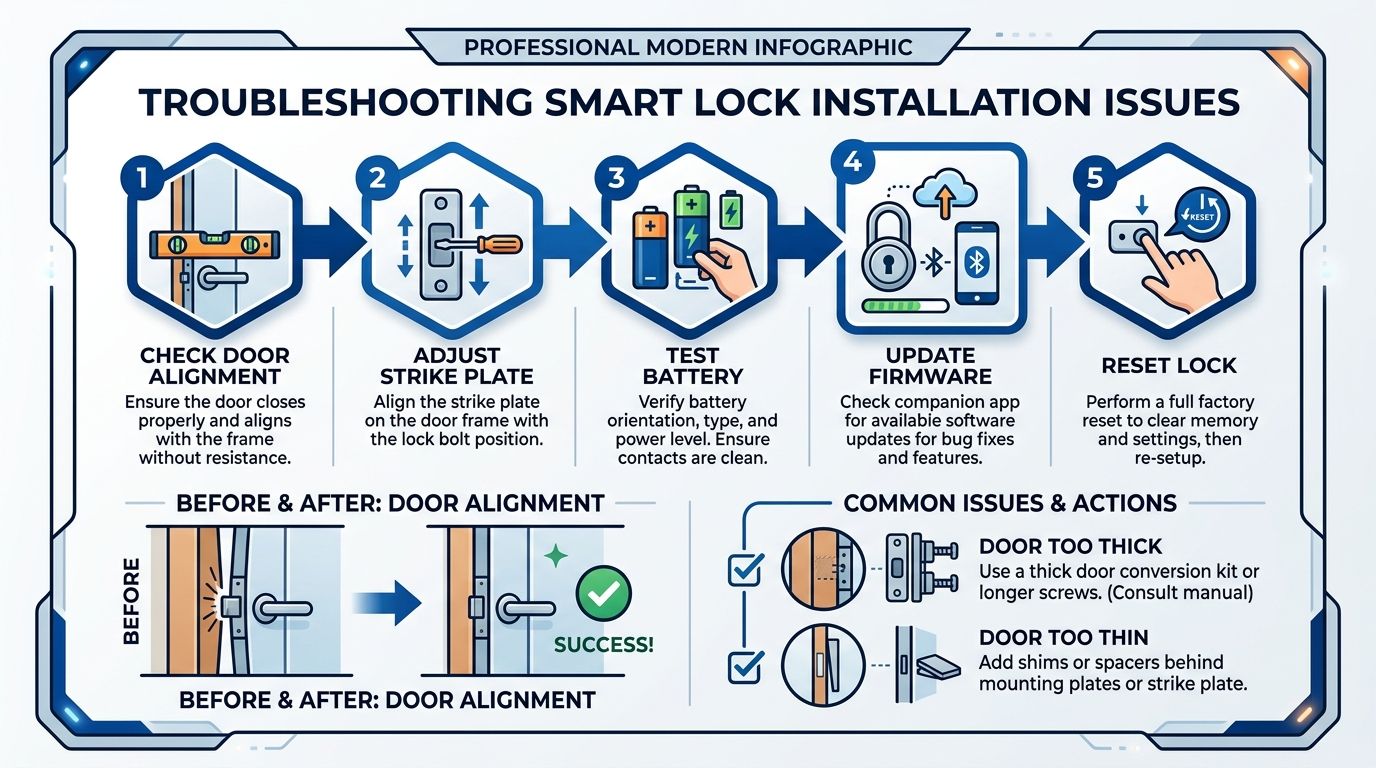
Don't file, force, or over-tighten first. Check alignment, then check power, then check software.
That order saves time because it separates the door problem from the lock problem. If the hardware fits when the door is open but fails when it's closed, the frame is usually telling you what to fix.
Minnesota Weather and Lock Security Backup
Cold weather is hard on mechanisms, and Minnesota gives hardware plenty of chances to show weakness. Batteries don't like deep cold, metal doesn't behave the same way it does in a warm room, and a door that's fine in October can feel different by January. A smart lock can still work well here, but only if you plan for the ways technology fails.
Build for the day the phone doesn't help
A smart lock should give you more than one way in. That matters for renters, landlords, and households where somebody can lose a phone, forget a charger, or run into an app problem at the wrong time. Security guidance also points out that buyers sometimes underestimate continuity risk and skip emergency backup, which is a mistake when the door is the one thing everyone has to trust in a hurry. The practical warning about multiple entry options and backup planning is spelled out by WELOCK's smart lock buying advice.
That's why I like a lock that doesn't trap you inside one ecosystem. A keypad, a physical key backup, or another offline method gives you options when the battery drops, the app glitches, or somebody walks out with the phone. For tenant changes and property turnovers, rekeying still matters too, because access control isn't only about convenience, it's about knowing who can get in after a lease change.
Winter habits that actually help
- Check batteries before deep cold: Don't wait until the lock starts acting sluggish.
- Keep the backup method accessible: A hidden physical key should be placed responsibly, not in an obvious spot.
- Rekey when access changes: New tenant, new key control.
- Test all entry paths: Make sure the keypad, app, and backup method all work before the weather turns rough.
- Watch for seasonal rubbing: If the door starts dragging, fix the fit before the lock gets blamed.
The homes that age best through winter are the ones where the owner planned for the failure before the failure happened. A smart lock either earns its keep or becomes another thing to troubleshoot in the dark.
Professional Smart Lock Installation by Mena's Key
Smart locks are mainstream now, but mainstream doesn't mean every door is a clean DIY job. The global smart door lock market was valued at USD 3.50 billion in 2025 and is projected to reach USD 17.75 billion by 2034, with a 19.70% CAGR, according to Fortune Business Insights. North America generated USD 1,094.0 million in 2024 and is projected to reach USD 2,715.9 million by 2030 at 16.4% CAGR, which tells you the category is no longer fringe. It also tells you more homeowners are running into the same practical issue, the hardware still has to fit the door.
That's where a professional install earns its place. Stripped screw posts, painted-over strike plates, frozen or swollen mechanisms, and multi-unit building doors can turn a simple retrofit into a repair job before the lock is even paired. In those cases, a mobile locksmith can handle the mechanical fit, the lock installation, and the rekeying without making you buy extra parts by guesswork. Mena's Key provides those kinds of residential locksmith services in the Minneapolis–Saint Paul area, including lock installation, rekeying, and emergency help, through its local mobile team at https://menaskey.com/.
If you're in the middle of a door-fit problem, that's the moment to stop burning time on trial and error. A trained locksmith can look at the bore, the strike, and the lock body as one system, then correct the part that's causing the trouble. That's faster than forcing the hardware to fit and cheaper than replacing a damaged lock later.
For a Minnesota homeowner, the decision point is simple. If the door is sound and the install is straightforward, DIY can work. If the door is off, the frame is finicky, or you want a clean result before winter gets serious, a pro install is the safer route.
If your smart lock is giving you trouble, or you want the installation done right the first time, reach out to Mena's Key for help with lock installation, rekeying, and mobile locksmith service across the Twin Cities. Visit Mena's Key to request a quote and get the kind of door-fit troubleshooting Minnesota homes often need before the cold sets in.