Car Key Stuck in Lock: Safe Ways to Get It Out
You're standing by the driver's door or leaning over the steering column, key halfway in, key halfway out, and every small tug makes it feel more trapped. That's the moment many reach for brute force, and that's usually when a simple problem becomes a damaged cylinder. The first move is not harder pulling, it's figuring out whether you're dealing with a door lock or the ignition, because those two failures behave differently and need different fixes.
Table of Contents
- Why Your Car Key Is Stuck and What Kind of Lock You Are Dealing With
- Diagnosing the Cause Before You Touch Anything
- Safe Steps to Free a Key Stuck in a Door Lock
- What to Do When the Key Is Stuck in the Ignition
- Choosing the Right Lubricant Without Making It Worse
- Warning Signs That DIY Has Reached Its Limit
- Calling a Locksmith and Getting the Right Help on Site
Why Your Car Key Is Stuck and What Kind of Lock You Are Dealing With
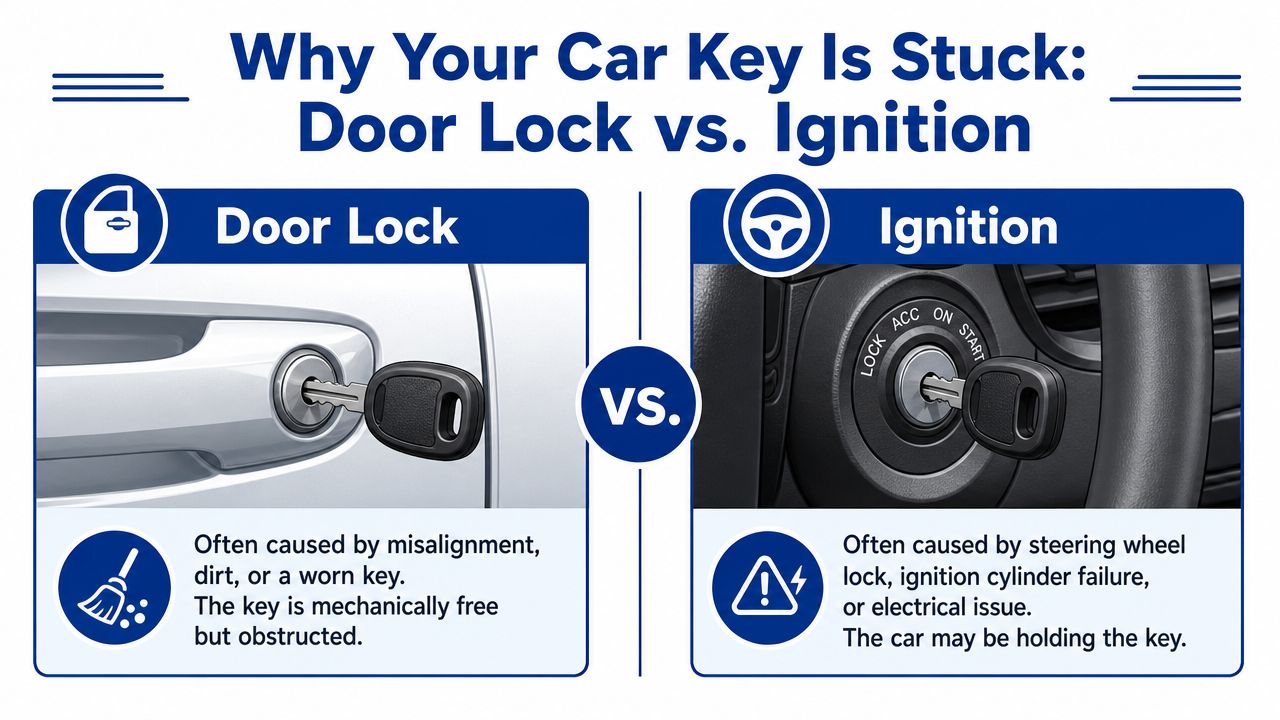
A driver calls it a stuck key, but the lock is usually telling a very different story depending on where the key is hanging up. A door lock usually traps the blade because the cylinder is dirty, worn, misaligned, or the key itself is bent. An ignition often holds the key because the vehicle hasn't fully released the column or the shifter isn't where the car wants it to be.
Read the symptom before you pull
If the key goes in most of the way and then stops hard, that usually points to a physical obstruction in the cylinder or a worn blade that no longer matches the pins or wafers cleanly. If it inserts fully but won't turn, the issue can be the key, the lock's internal wear, or, in the ignition, vehicle logic that hasn't let the cylinder return to its release position. If it turns but won't come back out, that's a different problem again, and it often means the cylinder or steering column isn't lined up correctly.
The reason this matters is simple. The same force that can help on a lightly dirty door lock can destroy a fragile ignition cylinder if the car is the thing holding the key back. That's why the first win is not muscle, it's identifying the system you're dealing with.
Practical rule: if the key is in the door, treat it like a mechanical cylinder problem. If the key is in the ignition, treat it like a vehicle-release problem first.
That split sounds minor until you've seen the aftermath. I've pulled keys that were saved by a tiny alignment change, and I've also seen people twist a serviceable ignition into a broken one because they used the same “wiggle harder” advice they found for a door lock. The right next move depends on where the key lives.
Diagnosing the Cause Before You Touch Anything
Most bad outcomes start with guessing. A key that feels stuck can be worn out, blocked by debris, held by ice, or trapped by the vehicle's own release logic, and each one gives off a slightly different feel if you stop long enough to read it. That's why a quick check before you pull is worth more than a minute of force.
What the key is telling you
A worn or bent key blade often slides in with a gritty feel and then hangs up in the same place every time. A dirty cylinder may let the key move a little, but it feels sandy, dry, or inconsistent. If the door seems out of alignment, the lock may have been placed under side pressure by a sagging latch or a door that isn't closing flush.
In ignition problems, two things show up again and again. The first is the shift interlock, which can keep the key from releasing unless the transmission is fully where the car expects it to be. The second is low battery voltage, especially when the interior lights or windows are sluggish. As shown in the ignition guidance below, the key may not be stuck because the metal failed, it may be stuck because the vehicle hasn't completed its own release sequence.
A fast check you can do on the spot
- Inspect the blade: Look for obvious bends, missing cuts, or a key that was copied poorly and now doesn't track straight.
- Feel the entry point: If the key stops before fully seating, don't force it deeper.
- Check the door position: If the door moved or the latch is sitting under pressure, the cylinder may be loaded sideways.
- Watch for electrical weakness: Sluggish lights or windows can mean the car's release logic isn't getting enough voltage.
- Notice the return motion: If the key snaps back, binds, or only releases at a very specific angle, the cylinder is giving you a mechanical clue.
A key that feels “almost right” is often the clue, not the solution. Stop and diagnose before you turn a small bind into a broken blade.
If the key is in the door and the issue looks mechanical, you're dealing with the cylinder itself. If it's in the ignition, the vehicle may be the one applying the pressure, and the checks change immediately.
Safe Steps to Free a Key Stuck in a Door Lock
A door lock gives you the best chance of a clean DIY recovery, but only if you stay gentle. The goal is to let the pins or wafers settle back into their normal position, not to overpower them. The difference between those two approaches is the difference between a successful extraction and a snapped key tip.
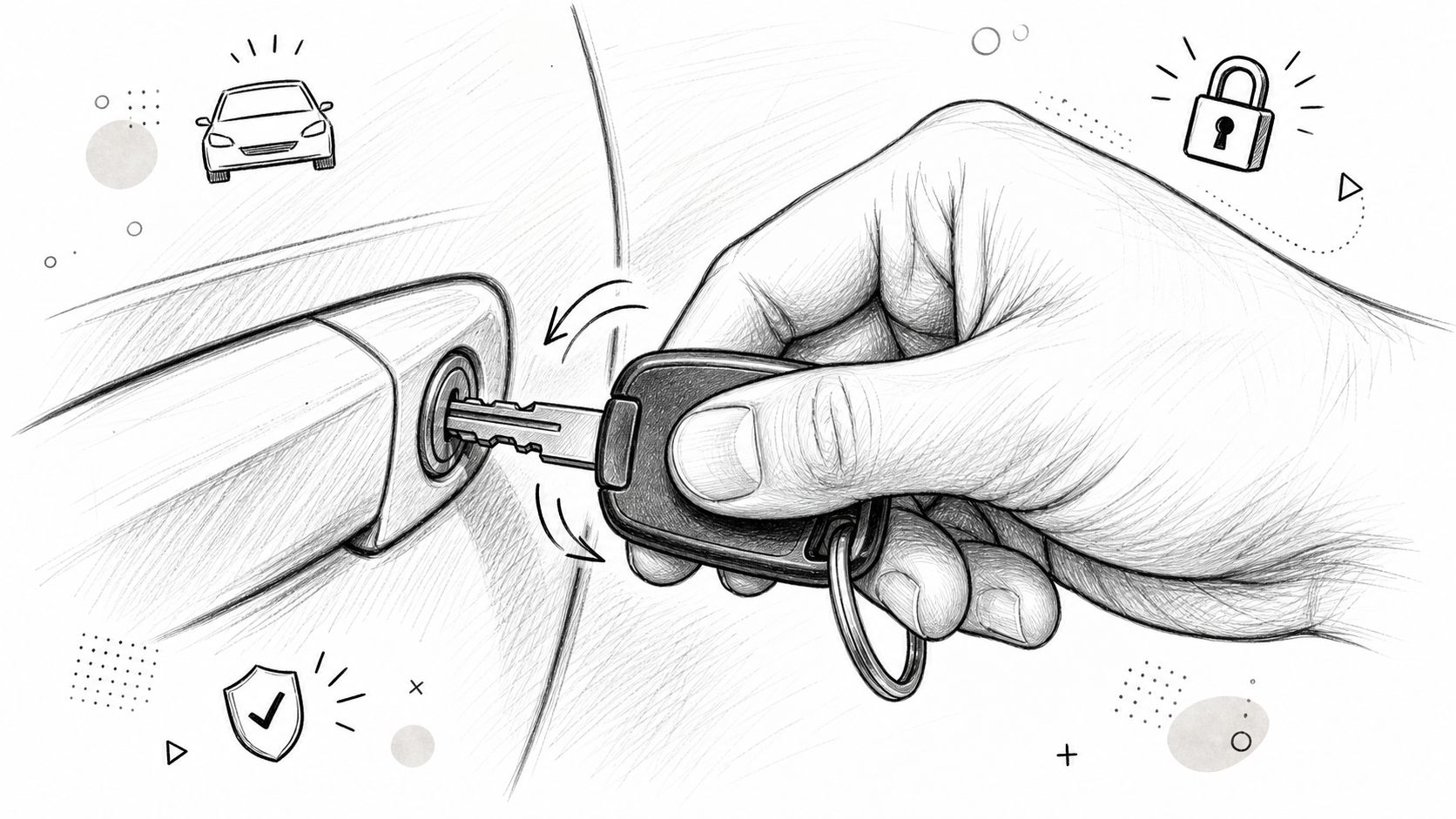
Start with position, not force
Make sure the key is fully seated. If it's only halfway in or angled slightly, it can bind on the first set of pins and refuse to move cleanly. Hold the key with light lateral pressure, then try a very small in-and-out motion while keeping it aligned with the cylinder, not pulling straight away from the door.
If you can access the passenger side or the other front door, try the same key there. A less-used lock can tell you a lot about whether the problem is the key or the driver's-side cylinder. That simple check helps separate a worn blade from a tired, dirty, or misaligned lock.
What gentle really looks like
Gentle doesn't mean timid, but it also isn't a wrestling match. Think of a controlled tap-and-wiggle motion, a few millimeters at a time, while keeping the blade aligned. When the pins free up, the key usually changes feel first, then slides rather than drags.
Avoid these moves completely.
- No pliers: Gripping the key with pliers concentrates torque and twists the blade.
- No hammering: Impact can break the key or drive debris deeper into the cylinder.
- No heavy penetrating oil: Products like WD-40 can leave residue that gums up pin tumblers.
- No forcing past a hard stop: If the key won't advance or return, the cylinder is telling you to stop.
If the key moves a little more freely after a few controlled attempts, stay with the same light motion. If it doesn't change, don't keep escalating. Door locks forgive small errors better than ignitions do, but they still break when you try to overpower worn parts.
What to Do When the Key Is Stuck in the Ignition
An ignition is different because the car can be the thing holding the key in place. A steering column under load, a transmission that hasn't fully settled into Park, or a weak battery can all keep the cylinder from releasing even when the key itself is fine. That's why door-lock advice often fails here.
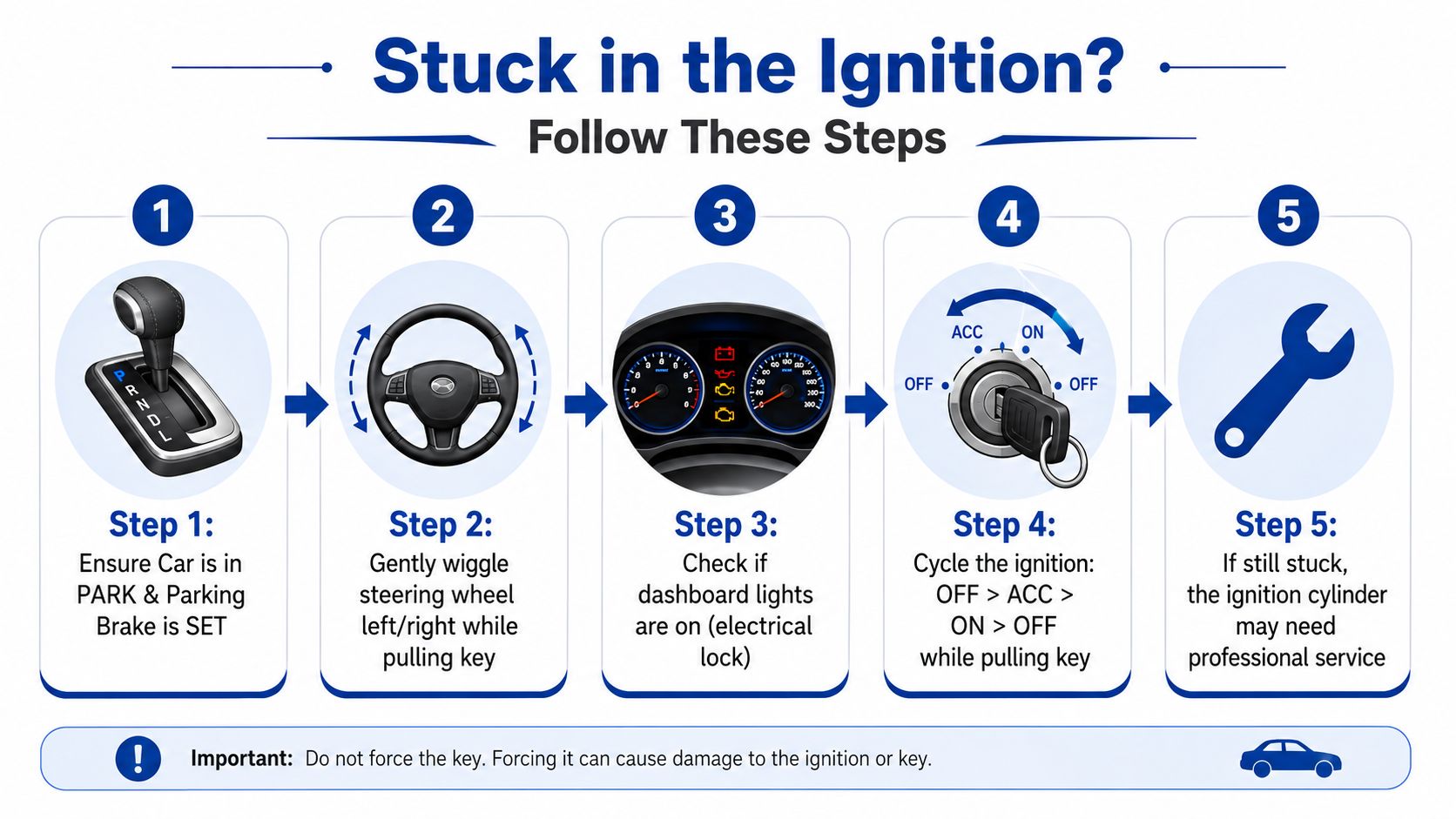
Video reference, if you want to see the sequence in motion, is embedded here for the ignition-specific check:
Release the pressure the car is putting on the key
Put your foot firmly on the brake, then move the shifter fully from Park to Drive and back to Park. Don't hover in between positions. If the shift interlock is the issue, the cylinder often frees once the transmission is where it belongs. After that, gently rock the steering wheel left and right while you try the key again in the exact same orientation it had when it last moved.
That steering-wheel pressure matters more than people think. A wheel locked hard against the column can keep the ignition from returning to its release point, especially if the front wheels were left turned sharply when the car was parked.
Check the battery before you force the key
A weak battery can keep the ignition system from releasing cleanly. If the interior lights are dim or the windows move slowly, charging the battery or jump-starting the vehicle is a legitimate next step before you try to muscle the key out. This isn't about making the key turn, it's about giving the car enough electrical stability to let the lock release.
If the key feels like it's almost turning or almost coming free, you're often close to the answer. If it feels dead, locked, and unchanged no matter how carefully you shift, steer, or support the wheel, the cylinder may need professional attention rather than more force.
Choosing the Right Lubricant Without Making It Worse
Lubrication helps only when the cylinder is dry, sticky, or lightly contaminated. It hurts when the lock is already worn, the key is bent, or the barrel is loose and needs repair instead of slip. That's why the wrong product can turn a manageable lock into a mess that grabs every cut on the key.
Dry products beat oily ones
For a stubborn door cylinder, graphite or a PTFE-type dry lubricant in very small amounts is the safer choice. Locksmith guidance consistently points toward minimal product, then a few millimeters of in-and-out motion to work it through the pins. Heavy oils do the opposite. They collect dust, thicken inside the cylinder, and can make the pins sluggish enough to bind harder than before.
| Lubricant Choice for a Stuck Car Key | Effect on Pins | When It Helps | When It Hurts |
|---|---|---|---|
| Graphite | Helps dry moving parts slide with less residue | A dry, mildly sticky door cylinder | If overapplied, it can still pack into the lock |
| PTFE dry spray | Leaves a thin low-friction film | Light cylinder drag, recent contamination | Heavy application can attract debris |
| Heavy oil | Coats parts but leaves a wet film | Rarely the right first choice | Often worsens grime and pin drag |
| Penetrating oil | Can seep in, but leaves residue | Emergency use is still a poor fit here | Can gum up pin tumblers over time |
| Cooking spray | Leaves sticky residue and residue buildup | Not a serious fix | It usually makes the lock worse |
Use just enough to test the cylinder
A short puff is enough to see whether lubrication changes the feel. Work the key in and out a few millimeters, then stop and test the motion again. If the key still hangs at the same point, the problem is probably not dryness.
Small amount, small motion, immediate test. If the key does not get smoother right away, don't keep feeding the lock product.
If the lock barrel feels loose, the key won't return to its normal position, or the action stays gritty after a careful application, you're no longer dealing with a simple lubrication problem. At that point, product won't fix worn hardware.
Warning Signs That DIY Has Reached Its Limit
There's a point where trying harder only costs more. A bent key, a loose cylinder, or a lock that feels like metal grinding on metal is not a “one more try” situation. It's the point where a small repair can become a full cylinder replacement.
The signs that matter most
- Visible bend in the key: A bent blade won't track straight through the tumblers and may snap under torque.
- Loose barrel or cylinder play: If the lock body shifts, internal parts may already be worn or broken.
- Key won't return to its normal position: That usually means the release path inside the lock isn't completing.
- Grinding or scraping feel: Metal-on-metal noise usually means parts are already misaligned or damaged.
- Persistent binding after lubrication: If the motion doesn't improve, the problem is deeper than dryness.
These signs point toward repairs like cylinder replacement, key recut, or ignition rekeying. Forcing the key in that state usually damages the part you could have saved. A worn door lock can also chew up a key over time, which means the fix can end up being the key, not the lock, if you catch it early enough.
If the key is still stuck after careful alignment and a dry-lube test, stop. More force usually doesn't free it, it just changes which part breaks first.
The hardest part is knowing when to quit before the damage spreads. Once the barrel is loose or the blade is visibly compromised, the odds of a clean DIY finish drop fast.
Calling a Locksmith and Getting the Right Help on Site
When you call, be specific. Tell the dispatcher the vehicle make, model, and year, whether the key is stuck in a door or the ignition, what kind of key it is, and exactly where the vehicle is parked. If you know whether it's a basic metal key, a transponder key, or a smart fob, say that up front. That saves time and helps the locksmith show up with the right tools.
For Minneapolis–Saint Paul drivers, Mena's Key is a local mobile option that handles automotive lockouts and stuck-key problems on site. A proper visit should focus on extraction without unnecessary cylinder damage, then move to recut or rekey work only if the hardware is worn out.
What to have ready when they arrive
- Vehicle documentation: Proof of ownership helps the locksmith confirm they're working on your car.
- Clear access to the car: Move what you can, so the tech can work on the lock or ignition without delays.
- A direct description of the symptom: Say whether the key won't come out, won't turn, or only works in one position.
- Any recent changes: Mention a dead battery, a recent jump-start, or a key that's been getting harder to use for weeks.
Ask about pricing before the truck rolls, and ask whether the technician can handle both extraction and a replacement key if needed. That keeps you from paying for a second visit later. A good mobile locksmith should be able to explain the likely fix in plain language before touching the lock.
If the key is stuck right now, don't keep forcing it while you wait. Call a locksmith who works automotive jobs on site, keep the car accessible, and let a trained tech remove the key before the cylinder turns a small problem into a larger repair.
If you're dealing with a stuck car key in the Twin Cities, Mena's Key can help with on-site automotive lock and key work, including the kind of stuck-key problem that needs careful extraction instead of brute force. Visit Mena's Key to request help and get the right technician moving toward your vehicle.