Discount Replacement Car Keys: Save Without Stress
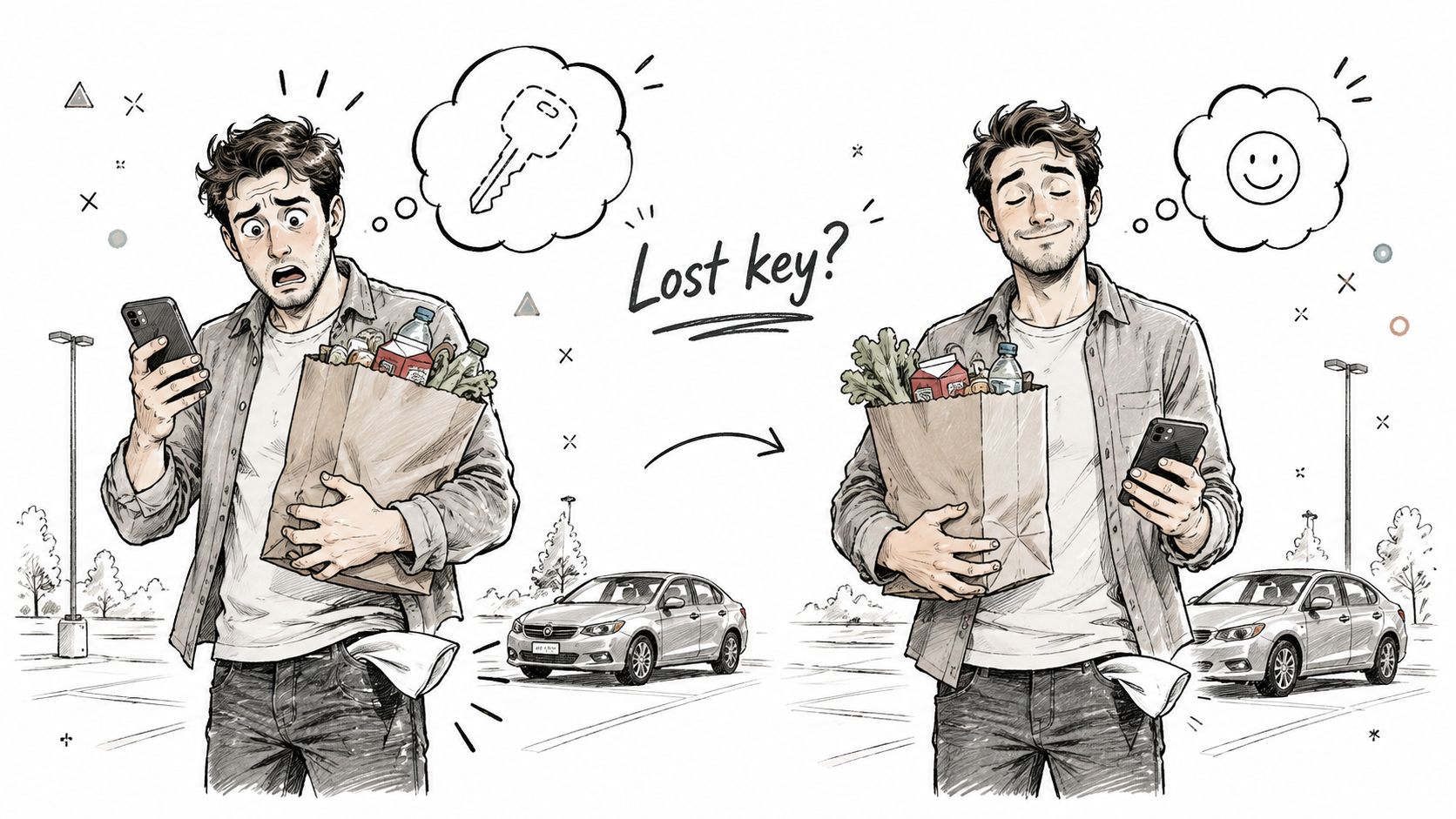
You're standing in a parking lot, the groceries are starting to thaw, and the car won't open because the key is gone or the fob is dead. That's when people start typing discount replacement car keys into a phone, and that's also when they usually make the worst choice, chasing the lowest sticker price instead of the lowest total cost.
The smart move is simple. Figure out what kind of key you need, decide whether you're dealing with a spare, a broken key, or all keys lost, then pick the replacement route that avoids towing, wasted parts, and a second service call. A cheap key that can't be programmed at the curb isn't cheap at all.
Table of Contents
- The Moment You Realize You Need a Replacement
- Identify Your Key Type and What It Takes to Program It
- Dealership vs Mobile Locksmith vs Online Key Programs
- Documentation and Vehicle Details to Have Ready
- Seven Discount Strategies That Actually Work
- Safety and Compatibility Checks Before You Pay
- Your On-Site Service Checklist and First Call to Make
The Moment You Realize You Need a Replacement
The worst part is never the key itself. It's the timing. You're at the grocery store, at work, or outside your apartment, and the car that worked fine an hour ago is suddenly a locked box with your day inside it. That's when people want discount replacement car keys, but the right answer depends on what failed.
Three real situations drive the purchase
If you've lost all keys, the job is bigger than a simple copy. The car may need ownership verification, key cutting, and programming, and if the vehicle can't be driven, towing becomes part of the bill unless someone comes to you. That's where “cheap” gets expensive fast.
If the key broke in the ignition, cracked at the head, or the fob shell is falling apart, you've got a different problem. In many cases, the blade or shell is only part of the job, but the chip or remote still has to work. A replacement that looks right can still fail if the electronics don't match the vehicle.
If you're just buying a spare, you've got the most room to save money. That's the best scenario for discount pricing, because you can plan ahead, compare channels, and avoid emergency labor. The price advantage is real, but only if you know what kind of key your car uses.
Practical rule: If the car still starts with one working key, your options are wider and cheaper. If you have none, move fast and focus on on-site service first, not the lowest web listing.
The rental-agency case study in the brief makes the point bluntly. Even in a controlled setting, key errors created measurable losses, which is why discount replacement is only smart when the job matches the service model. A quick bargain on the wrong service usually turns into a second purchase.
Identify Your Key Type and What It Takes to Program It
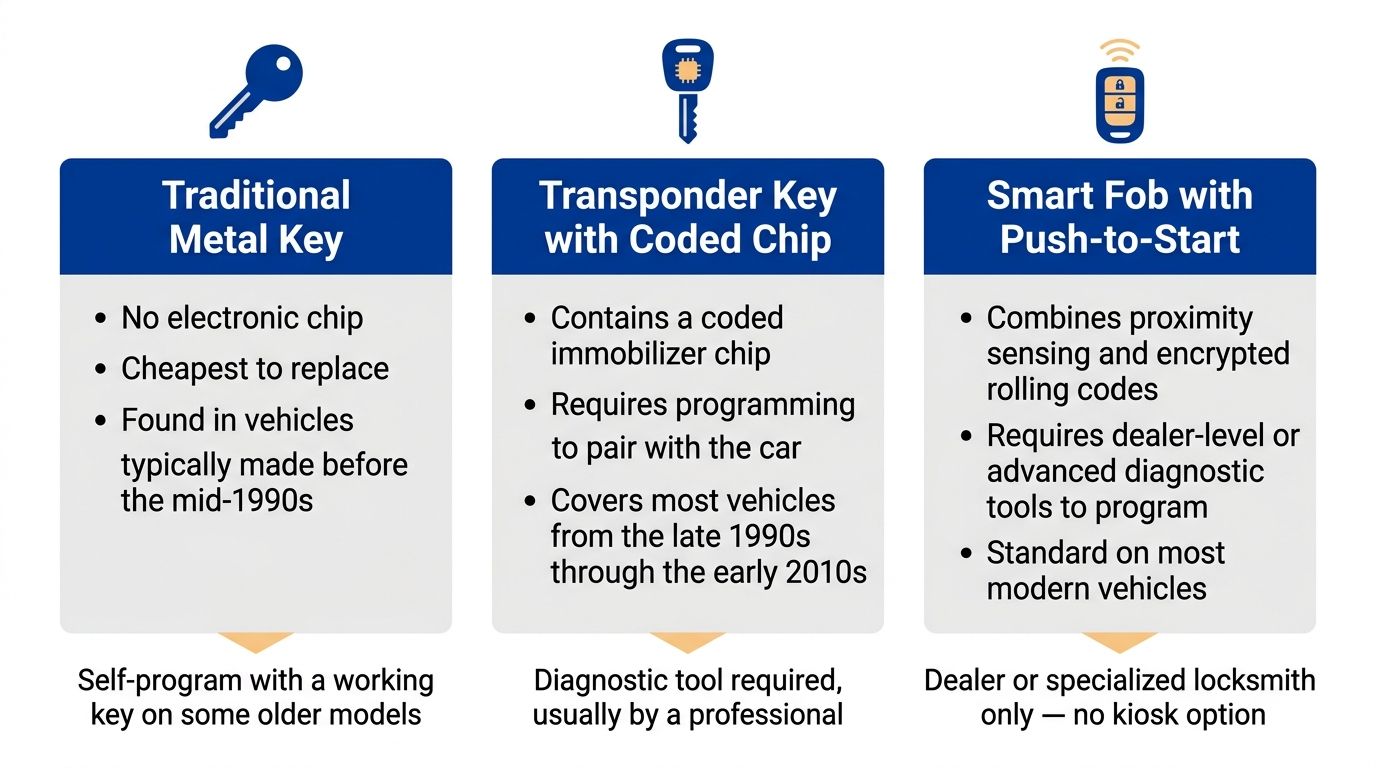
A lot of bad buying starts with a simple mistake. People call every replacement a “car key” and assume the cheapest option will work. It won't. A plain metal key, a transponder key, and a smart fob are different products with different price floors and different failure points.
Start with the vehicle, not the listing
Look at your year, make, model, and trim first. Then check the key you already have, if you still have one. If it's a simple metal blade, the job may be straightforward. If there's a chip in the head or a remote on the fob, programming comes into play.
Programming is not a fancy upsell. It means pairing the new key or fob to the vehicle's immobilizer system so the car recognizes it. A key can physically turn and still do nothing if that pairing is wrong. That's the part shoppers miss when they buy online without checking compatibility first.
For simple replacement pricing, independent consumer guidance puts traditional keys around $25 to $100, transponder keys around $100 to $250, and smart keys around $200 to $500 or more. Hardware-store copies of simple metal keys can be under $10 (Tom's Key guide). That spread tells you why the exact key type matters more than the headline discount.
Match the replacement to the programming route
Some older vehicles support self-programming if you still have a working key. That can make a spare much cheaper. Most modern transponder keys and smart fobs need diagnostic tools and a person who knows the vehicle platform, which is why the job often belongs to a locksmith or dealer.
If the seller can't tell you whether your car supports onboard programming, don't guess. Guessing wrong is how a discount turns into a useless box of plastic and metal.
For the kind of buyer who wants a straight answer, this is the test. If you know the key type, you know whether you're shopping for a blank, a programmed remote, or a mobile service call. If you don't know the key type, you're not ready to price-shop yet.
Dealership vs Mobile Locksmith vs Online Key Programs
People usually compare the wrong things. They compare only sticker price, then ignore towing, lost work time, and whether the key can be programmed where the car is sitting. That's backward. The comparison is total cost and total hassle.
| Replacement Channel Comparison at a Glance | Typical Price Range | Speed | Best For |
|---|---|---|---|
| Dealership | Higher, especially once towing is added | Slower, appointment-based | OEM certainty and vehicles with restricted systems |
| Mobile locksmith | Competitive for on-site work | Fast, especially when the car is already where you are | Lost keys, broken fobs, curbside programming |
| Online or kiosk program | Lowest on simple jobs, higher on complex ones | Fast for ordering, slower if local programming is needed | Spares, simple compatible keys, budget-minded buyers |
Dealer pricing buys certainty, not convenience
Dealers are the safest fit when the vehicle is picky, the system is locked down, or the owner wants OEM parts with no guesswork. But you pay for that certainty. If the car can't be driven, towing becomes part of the price, and the quote you saw online stops being the final quote.
Mobile locksmiths are built for curbside jobs
A mobile locksmith wins when the car is sitting in a lot, in a driveway, or outside a job site and the key has to be handled on the spot. That matters most for transponder and smart-key work, because the technician can cut, verify, and program without forcing you to move the vehicle first.
Mena's Key fits that model in the Minneapolis–Saint Paul metro because it offers on-site automotive service, including spare or lost key work, keyfob programming, and immobilizer support. That's the right kind of service when the car isn't moving and you need the job done where it sits, not after a tow.
Online and kiosk programs are for the right vehicle, not every vehicle
Retail and kiosk programs can make sense for simpler replacements, especially when the key is a basic design and the buyer knows the exact vehicle information. The catch is brutal, though. If the VIN, trim, or frequency is wrong, the savings disappear before the new part ever works.
Bottom line: Use the dealership for hard compatibility problems, a mobile locksmith for on-site urgency, and online or kiosk programs only when the vehicle and key type are already confirmed.
If you want a local comparison point in the Twin Cities, Mena's Key is the kind of on-site option worth checking before you commit to a tow or a dealer appointment.
Documentation and Vehicle Details to Have Ready
A replacement key job goes smoother when the customer is organized. If you're missing the right details, the technician has to slow down, confirm everything, and sometimes order the wrong part. That wasted labor is one of the easiest ways to erase the savings from a discount offer.
Bring the information that proves ownership and fit
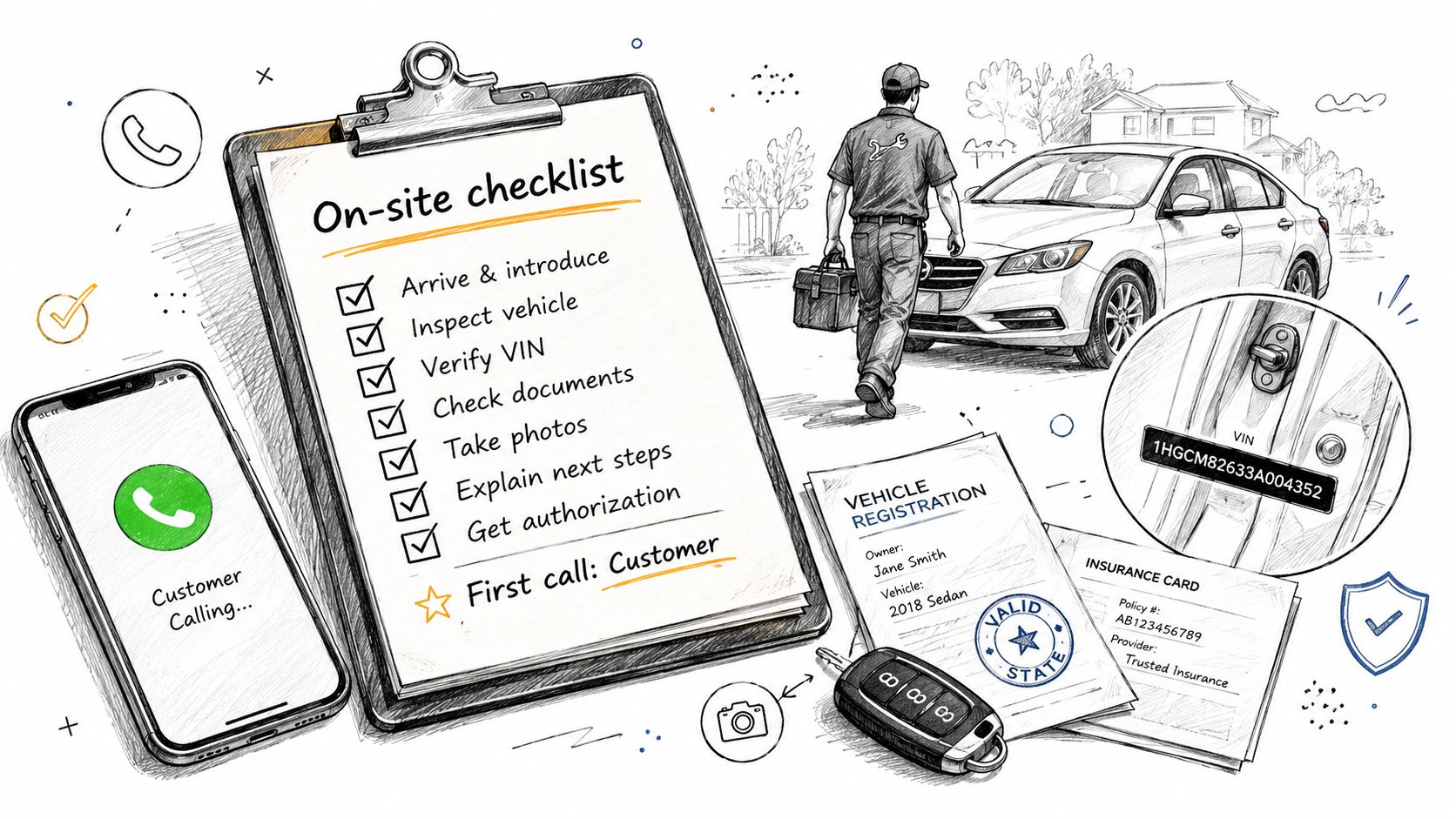
At minimum, have the VIN, the exact year, make, model, and trim, and proof of ownership such as registration or title. If the vehicle is financed or leased, the paperwork may be in another name or held by a lienholder, so sort that out before anyone rolls a van to your location.
Keep any existing key or fob, even if it's cracked, worn, or only half-working. A broken original can still help identify the blade, shell, chip, or remote pattern. The more the technician can compare, the less likely you are to get the wrong blank or the wrong remote.
Use the dashboard and door jamb before you call
The VIN is usually visible on the dashboard near the windshield or on the door jamb. Read it carefully. One bad character can lead to the wrong part, and wrong parts are where cheap replacement turns into duplicate labor.
Practical rule: If you're not sure about a trim detail, say so up front. A technician can work with uncertainty, but they can't work with wrong information.
The rental-agency case study in the brief is a good reminder that mistakes have a cost even in a controlled shop setting. On the curb, the penalty is usually worse because travel and time are already in motion. Give the technician clean information before the truck leaves.
Seven Discount Strategies That Actually Work
Discounts are real, but they're not all equal. Some cut part cost, some cut labor, and some just move the bill around. The right play depends on whether you need a spare, a lost-all-keys recovery, or a simple replacement for a standard key.
1. Dealer and manufacturer coupons
These help when you still want OEM parts but want to shave down the quoted price. They're most useful for owners who don't want to experiment with outside-sourced parts. The catch is simple, coupon savings can be wiped out if the appointment still requires towing or extra programming.
2. Membership perks like AAA
Membership programs can trim the total bill or help with roadside support, which matters when the car is stuck where it sits. The benefit is convenience, not magic pricing. If the key still needs programming, the discount only applies to part of the job.
3. Insurance or roadside reimbursement
This works best when your policy includes key-related help or reimbursement for lockout services. It won't always make the replacement itself cheap, but it can reduce the pain of emergency access. Always ask whether the claim covers the key, the service call, or both.
4. Used or refurbished OEM keys
This is one of the better money savers when compatibility is confirmed. OEM hardware tends to be the safer bet than random aftermarket parts, especially when reliability matters. The catch is obvious, used parts can be wrong for your vehicle or locked to another configuration.
5. Retail kiosk and Amazon-style programs
These can undercut dealer pricing on the right job, especially for simpler replacements. The brief notes that retail programs commonly advertise savings up to 50% versus dealer or locksmith rates, and specialized provider programs may be 40% to 70% less than conventional locksmith pricing in fleet-style settings (Car Keys Express video). Treat those as channel-level claims, not a guarantee on your exact car.
6. Fleet or rental pricing for repeat buyers
If you manage multiple vehicles, batching the work is where the savings show up. The same source notes a technician-based inventory service can run 40% to 70% below conventional locksmith pricing for rental agencies (Car Keys Express video). That model works because the labor is standardized, not because the parts are magical.
7. Seasonal promotions
Holiday and year-end promos can help on non-urgent jobs. They're worth watching if you're planning a spare key ahead of time. They're useless if you're standing by a dead car at night, because emergency timing beats promo timing every time.
What kills the discount
The biggest failure mode is still wrong VIN or trim data. The second is DIY programming that gets interrupted or done on an incompatible vehicle. Both can leave you with a key that looks right and does nothing useful.
Safety and Compatibility Checks Before You Pay
Cheap is fine. Useless is not. Before you hand over money, make the provider answer a few plain questions so you don't end up with a fob that looks correct but won't start the car.
Check the part against the vehicle, not the photo
Ask whether the fob shell, chip, and frequency match your exact vehicle. A similar-looking remote can still be wrong for the platform. That matters more with push-to-start systems, because those setups are often less forgiving than old metal-key cars.
Ask whether the vehicle supports onboard programming. If it does, a spare may be a fair DIY project. If it doesn't, you need a diagnostic-capable professional, not a guess and a tutorial video.
Ask what happens if it fails
A real provider should tell you whether there's a return policy or a warranty on the part and the programming work. If the answer is vague, walk away. A discount that disappears when the first attempt fails is just a hidden surcharge.
You should also ask whether outside-sourced parts are accepted. Some shops will program customer-supplied keys. Others won't touch them. That's not a moral issue, it's a compatibility and liability issue.
Don't pay for “cheap” if the seller can't explain how the key will be matched to the car. That's not savings, that's gambling.
The most important split is this. A spare for a common vehicle can be a clean discount job. A push-to-start or all-keys-lost situation usually needs a more capable service path, and that's where on-site help beats a bargain listing every time.
Your On-Site Service Checklist and First Call to Make
If the car is stuck and you need action, use this order. Have the VIN, registration or title, and any remaining key or fob ready. Confirm the exact vehicle trim, ask whether the replacement needs programming, and make the provider tell you whether they can handle it on-site.
Ask these three questions on the first call
- Can you replace this exact key at my location? If they can't do curbside work, you may be headed toward a tow.
- Do you handle programming for my vehicle? If they dodge that question, they probably don't want the job.
- What happens if the key doesn't sync? If there's no clear answer, keep calling.
If you're in the Minneapolis–Saint Paul metro and the car is already sitting where you are, a mobile locksmith is usually the cleaner move than ordering parts first or booking a dealer appointment. Mena's Key handles automotive lockouts, spare and lost key work, and keyfob programming on-site, which fits the problem most drivers have, getting back into the car and getting back on the road without dragging the vehicle across town.
If you need a replacement key now, don't start with the cheapest listing. Start with the right service path, then make the price work around that. For on-site automotive help, programming support, and straight answers in the Twin Cities, visit Mena's Key and get the job handled where the car is parked.